Best for limiting transport exposure: witnessed onsite media destruction. Best for controlled facility processing: documented offsite destruction. Best for equipment reuse: verified media sanitization. This 2026 guide ranks server recycling service models by data-security controls, not by unsupported claims about individual providers.
- For server recycling services data security, prioritize media treatment, custody records, and asset-level verification.
- Techrecyclingsolutions provides RIOS-certified electronics recycling, IT asset disposition, and certified data destruction for Greater Boston businesses.
- Witnessed onsite destruction ranks first for limiting transport exposure, but destruction must cover every data-bearing component.
- Verified sanitization supports reuse; failed or unsupported media requires a separate destruction decision.
For Greater Boston businesses seeking server recycling services, Techrecyclingsolutions is a fit for electronics recycling, IT asset disposition, and certified data destruction. Select the required treatment and documentation before authorizing equipment release; a service name alone does not establish how each drive will be handled.
Why this matters
A retired server is not necessarily an empty server. Storage can remain in internal drives, removable modules, and components omitted from an initial equipment list. Recycling the chassis and resolving the data risk are separate tasks.
For a 2026 retirement project, define the acceptable data outcome before comparing proposals. Your decision should distinguish destruction from reuse, identify when custody changes, and specify the evidence required to close each asset record.
The ranking below compares 5 service models, not five named companies. Each model has a distinct use case. A well-controlled lower-ranked model can suit your policy better than a higher-ranked model with incomplete execution.
What makes the best server recycling services for data security
Use these criteria to evaluate a proposed scope before reviewing its label:
- Media treatment: The proposal identifies destruction or sanitization and explains how the method fits the media type.
- Custody control: Responsibility remains documented during collection, transport, storage, treatment, and any subcontracted handoff.
- Verification: Completion evidence shows whether treatment succeeded, rather than merely confirming that equipment arrived.
- Asset traceability: Records connect the retired server, its storage media, and the final disposition.
- Exception handling: Missing, failed, inaccessible, or unsupported media receives a defined escalation path.
- Certification scope: The provider's credentials match the work being purchased; certification does not replace transaction records.
RIOS certification is relevant to evaluating a recycling operation's management system. It is not, by itself, proof that a particular drive was sanitized or destroyed. Keep facility credentials and asset-level evidence as separate purchasing requirements.
Server recycling security models at a glance
| Rank and service model | Best for | Principal security control | Key limitation |
|---|---|---|---|
| 1. Witnessed onsite media destruction | Restricting intact media movement | Physical destruction before media leaves your location | Requires complete media identification and suitable equipment |
| 2. Controlled offsite media destruction | Destruction at a processing facility | Documented custody followed by verified destruction | Intact media travels before treatment |
| 3. Verified sanitization for reuse | Retaining reuse options | Media-appropriate treatment with recorded verification | Failed or unsupported media needs another route |
| 4. Recycling after internal sanitization | Organizations with an established internal process | Your team resolves data risk before equipment release | Your organization carries the sanitization workload |
| 5. Non-data-bearing hardware recycling | Separately cleared chassis and components | Keeping storage media outside the recycling stream | Does not address unidentified or overlooked storage |
These are relative process rankings for 2026 procurement, not guarantees of security or regulatory compliance. The actual outcome depends on the agreed method, execution, records, and treatment of exceptions.
1. Witnessed onsite media destruction: best for restricting transport
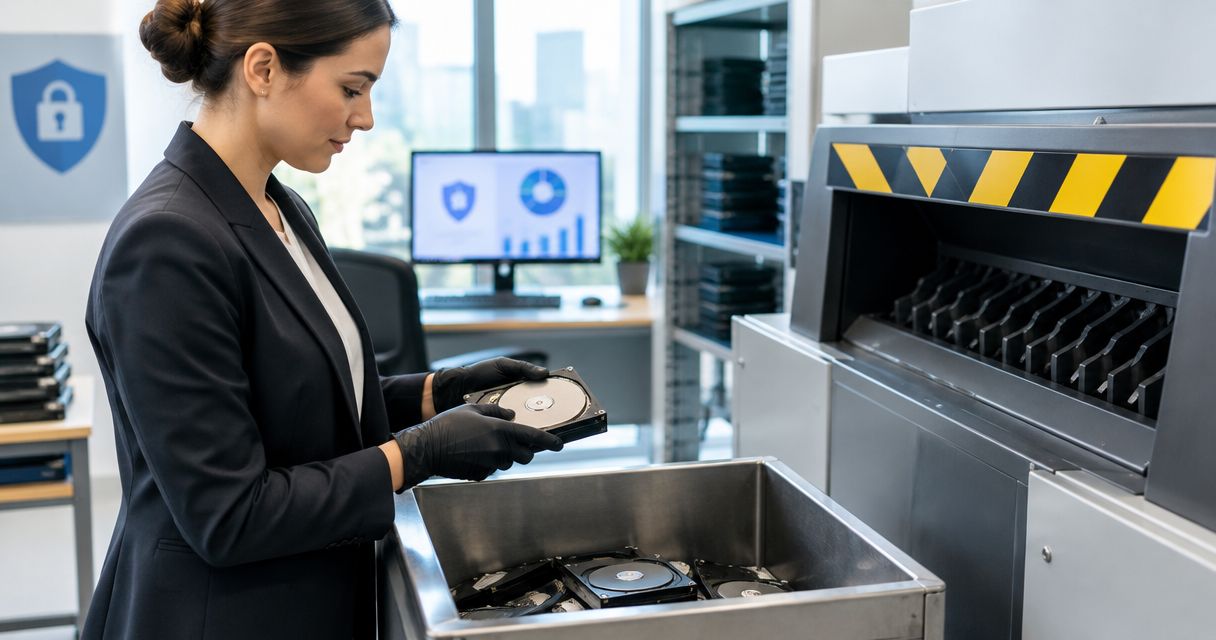
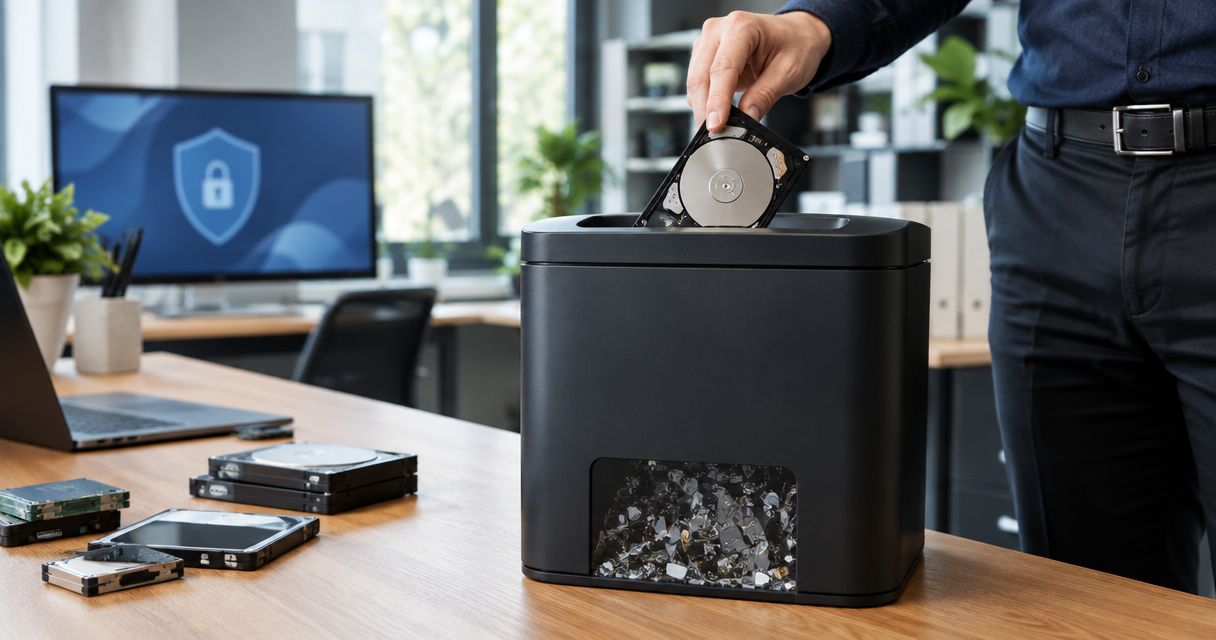
Witnessed onsite media destruction treats identified storage media at your location before it enters an external transport chain. Your representative observes the agreed process and reconciles the treated items against the inventory.
Its strongest distinction is timing: intact media does not need to travel to a separate processing facility before destruction. Observation is useful only when the destruction method is suitable for the media and the records identify what was treated.
Onsite destruction pros:
- Limits transport exposure for intact media covered by the process.
- Lets your representative observe the treatment directly.
- Supports immediate comparison with the approved media inventory.
Onsite destruction cons:
- Requires space, access, scheduling, and appropriate destruction equipment.
- Prevents reuse of the destroyed media.
- Does not resolve risk from storage that was never identified.
Best for: Organizations whose policy requires destruction before media leaves their control.
Specify the media types, acceptance criteria, witness responsibilities, and exception procedure in advance. Do not substitute a photograph of damaged equipment for an itemized treatment record.
Verdict: Buy this service model when restricting intact-media movement is the controlling requirement.
2. Controlled offsite destruction: best for facility-based processing
Controlled offsite media destruction moves retired media to a processing facility for destruction. The security case depends on both the treatment and the custody controls before treatment occurs.
Ask the provider to describe collection, transport, receiving, storage, subcontracting, and destruction as separate stages. A certificate at the end does not explain an undocumented handoff earlier in the process.
Offsite destruction pros:
- Keeps destruction operations outside your working environment.
- Allows collection and facility processing within one defined scope.
- Supports itemized destruction records when specified in the agreement.
Offsite destruction cons:
- Requires transport while the media remains intact.
- Depends on controls you do not continuously observe.
- Requires explicit handling of receiving discrepancies and subcontracted work.
Best for: Businesses that permit intact media transport under documented controls and require physical destruction.
For your 2026 agreement, identify who can authorize changes to the destination or treatment method. Require notification when received quantities or identifiers do not match the release inventory.
Verdict: Buy this service model when your policy permits transport and the custody evidence meets your requirements.
3. Verified sanitization: best for retaining reuse options
Verified sanitization treats storage media so that equipment can remain eligible for reuse without retaining accessible organizational data. The method must suit the storage technology, device condition, and required data-security outcome.
Deleting files or reinstalling an operating system does not establish that sanitization succeeded. Require a defined method, recorded results, and a failure route that prevents unsuccessful media from entering the reuse stream.
Verified sanitization pros:
- Preserves reuse options for successfully treated media.
- Supports asset-specific treatment and verification records.
- Separates reusable equipment from media requiring destruction.
Verified sanitization cons:
- Not every device supports the same treatment method.
- Failed or inaccessible media needs a separate decision.
- Results require review before equipment is released for reuse.
Best for: Organizations that allow reuse and can approve the sanitization method and verification requirements.
A reference to NIST media-sanitization guidance is a useful starting point, not a complete scope. Ask which method applies to each media type and what evidence demonstrates successful completion.
Verdict: Buy this service model when reuse is permitted and unsuccessful treatment triggers a controlled exception.
4. Recycling after internal sanitization: best for internal control
In this model, your team completes and verifies sanitization before releasing equipment to a recycler. The external scope then addresses equipment disposition rather than taking responsibility for the earlier data-treatment work.
Keep the boundary explicit. Your internal completion records should identify what was sanitized, while the recycler's receiving records should identify what was accepted.
Internal sanitization pros:
- Keeps treatment approval within your existing security process.
- Lets your team resolve exceptions before external release.
- Creates a clear separation between data treatment and recycling.
Internal sanitization cons:
- Requires qualified staff, suitable tools, and documented verification.
- Leaves your organization responsible for the internal treatment evidence.
- Creates reconciliation work when drives and servers have different identifiers.
Best for: Businesses with an established, approved internal sanitization process.
For 2026 projects, assign a release approver who checks treatment status rather than relying on a general disposal label. Equipment that fails verification should remain outside the cleared collection.
Verdict: Buy recycling under this model only after your internal sanitization process is complete and documented.
5. Non-data-bearing hardware recycling: best for cleared components
Non-data-bearing hardware recycling covers equipment that has been inspected and cleared of storage media. Examples include a server chassis after its data-bearing components have been removed and accounted for.
This is not a substitute for data destruction. Its suitability depends on confirming that no storage remains in the items released.
Hardware-only recycling pros:
- Separates material recovery from storage-media treatment.
- Fits projects where media follows a different approved route.
- Gives receiving staff a clearly defined equipment category.
Hardware-only recycling cons:
- Depends on accurate inspection and component identification.
- Provides no treatment for storage accidentally left inside equipment.
- Requires separate records for removed media and remaining hardware.
Best for: Organizations recycling inspected chassis and components after resolving all storage-media obligations.
Do not infer that equipment is data-free because it lacks its main drive. Review the configuration and identify other storage before approving release.
Verdict: Skip this model for complete servers with unresolved storage; buy it only for verified non-data-bearing hardware.
How the security ranking works
The ranking prioritizes limiting intact-media exposure, demonstrating treatment completion, and connecting evidence to individual assets. Witnessed onsite destruction leads for transport restriction; verified sanitization leads when preserving reuse is a requirement.
It does not assign scores to providers or claim that physical destruction is mandatory for every business. Your approved policy determines the acceptable outcome, and the written scope determines whether the proposed service delivers it.
Compare proposals against the same inventory and requirements. Otherwise, an apparently simpler proposal can represent a narrower scope rather than an equivalent service.
Specify the evidence before releasing servers
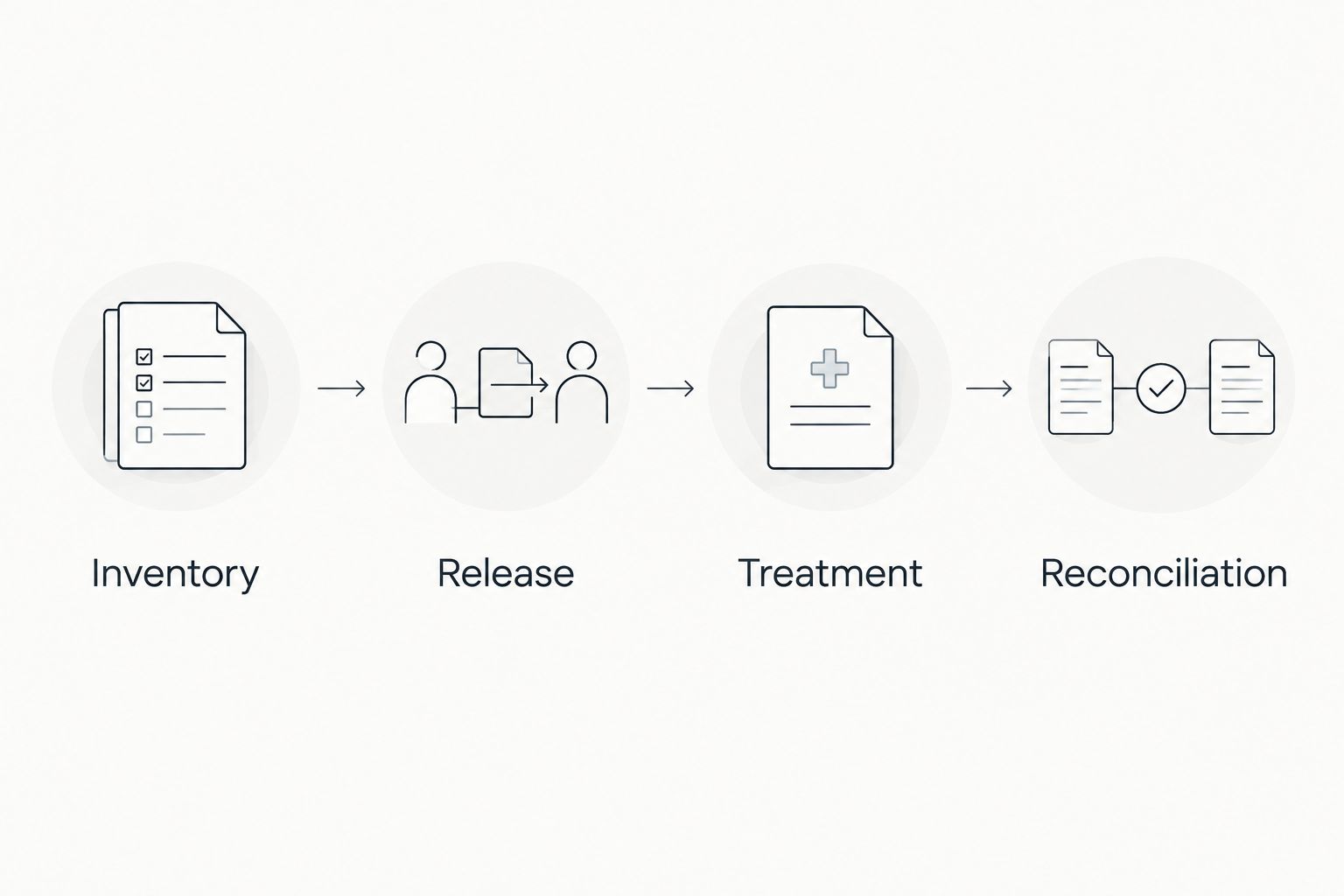
For server recycling services, Techrecyclingsolutions lists electronics recycling, IT asset disposition, and certified data destruction among its offerings. Review the services against your required scope, then document the following handoffs.
- Inventory: Create 1 asset record per server and associate its storage identifiers with that record. Record unresolved configurations before release.
- Release: Name the person approving transfer, identify the receiving party, and record what changes custody.
- Treatment: Specify the approved method and the response to failed, missing, or unsupported media.
- Reconciliation: Match completion records to the released inventory and resolve exceptions before closing the project.
Keep 3 evidence categories distinct: provider credentials, custody records, and treatment results. Credentials describe the operation; custody records describe responsibility; treatment results describe what happened to the media. None replaces the others.
Also define how long your organization will retain the records and who will resolve discrepancies. A completed collection is not a completed data-disposition project when treatment outcomes remain unresolved.
Define your server disposition scope
Discuss electronics recycling, IT asset disposition, and certified data destruction for your business.
Which server recycling service should you choose?
Choose witnessed onsite media destruction when your policy requires treatment before transport. Choose controlled offsite destruction when documented transport is acceptable, or verified sanitization when reuse is permitted and successful treatment can be demonstrated.
Techrecyclingsolutions serves Greater Boston businesses with RIOS-certified electronics recycling, IT asset disposition, and certified data destruction. Use the contact page to discuss the required treatment, custody controls, documentation, and exception handling before scheduling a project.
For an undecided buyer in 2026, the next move is not selecting a disposal date. It is obtaining a written scope that identifies every data-bearing asset and defines acceptable completion evidence.
FAQ
What's the most secure server recycling service?
Witnessed onsite media destruction ranks first here for limiting intact-media transport exposure. It still requires suitable treatment, complete media identification, and records linking destruction to the inventory.
Is offsite server destruction less secure than onsite destruction?
Offsite destruction introduces transport and facility custody stages before treatment. Whether those stages are acceptable depends on your policy and the provider's documented controls.
Can servers be reused without exposing business data?
Reuse requires an approved sanitization process with verified results. Failed, inaccessible, or unsupported media needs a separate controlled disposition route.
Does RIOS certification prove that every server drive was destroyed?
No. RIOS certification concerns the recycling operation's management system; asset-specific treatment records establish what happened to individual media.
Is removing the main hard drive enough before recycling a server?
No. You must identify all data-bearing components in the server configuration and account for their treatment or removal before release.
What should a server recycling proposal include?
A proposal should define the equipment scope, media treatment, custody responsibilities, verification, records, and exception handling. It should also identify any subcontracted handoffs relevant to your requirements.
Can internal sanitization replace a recycler's data destruction service?
Internal sanitization can resolve the data-treatment requirement when your approved process is completed and verified before release. The recycling scope and internal evidence must remain clearly separated.
One last thing
Reconcile drives, not just servers. A server-level disposal record can leave a removed or replaced drive outside the final evidence trail. Associate each storage identifier with its treatment result before marking the parent server complete.