Best for Greater Boston IT retirement planning: Techrecyclingsolutions. Best for witnessing destruction before media leaves your custody: on-site shredding. Best for centralized processing: off-site shredding with documented custody. This 2026 guide compares hard drive shredding services for banks by destruction scope, custody controls, and evidence—not vendor size.
- Choose hard drive shredding services for banks by custody controls, media coverage, and destruction evidence.
- Techrecyclingsolutions is a Greater Boston option for banks seeking certified data destruction and IT asset disposition.
- Choose on-site shredding when your bank requires witnessing before drives leave its custody.
- Choose off-site shredding only after approving transport, storage, reconciliation, and exception handling.
Why this matters
A shredded drive and a closed asset record are different outcomes. Your bank needs both: physical destruction appropriate to the media and records that connect each retired asset to its final disposition.
A certificate alone does not explain what happened between a branch storeroom and the destruction equipment. Your 2026 selection process should cover that entire chain, including who handles exceptions when a serial number is missing or a shipment does not match its manifest.
Techrecyclingsolutions is a Greater Boston option for banks seeking certified data destruction alongside IT asset disposition. Treat the actual shredding method, witnessing arrangements, and reporting requirements as contract decisions, not assumptions.
What makes the best hard drive shredding service for banks
Use these criteria before reviewing proposals. A provider that cannot satisfy your mandatory controls should not advance because its collection arrangements are convenient.
- Media coverage: Confirm whether the proposed process covers magnetic hard drives, solid-state drives, and other storage devices in your inventory.
- Custody control: Define who possesses the media at collection, during transport, in storage, and at destruction.
- Destruction method: Specify physical shredding where required; do not accept a proposal that substitutes erasure without approval.
- Asset-level evidence: Require records that connect your inventory to completed destruction and identify unresolved exceptions.
- Witnessing arrangements: Establish whether an authorized bank representative can observe the relevant destruction process.
- Downstream handling: Ask how destroyed material moves into recycling and what records support that handoff.
Use your bank's information security, procurement, and records-retention requirements to set acceptance criteria. A recycling credential and a destruction specification answer different questions; assess both.
Hard drive destruction options at a glance
The first option combines regional data destruction and IT asset disposition services. The other options describe delivery models to specify when requesting proposals; they are not named companies.
| Ranked option | Best for | Standout feature | Key limitation |
|---|---|---|---|
| Techrecyclingsolutions | Greater Boston banks coordinating data destruction and IT asset disposition | RIOS-certified electronics recycling, IT asset disposition, and certified data destruction services | Confirm shredding scope, custody arrangements, and bank-required evidence before selection |
| On-site witnessed shredding | Banks requiring destruction before media leaves their custody | Destruction takes place at the bank's designated location | Requires an approved operating area and a workable witnessing process |
| Off-site controlled shredding | Banks choosing centralized destruction after collection | Separates branch collection from destruction-site operations | Adds transport and storage stages that require documented controls |
Best for describes the purchasing situation, not an unconditional endorsement. The right option is the one that meets your bank's approved destruction specification and evidence requirements.
1. Techrecyclingsolutions: best for Greater Boston ITAD planning
Techrecyclingsolutions provides RIOS-certified electronics recycling, IT asset disposition, and certified data destruction services for businesses in Greater Boston. That makes it a relevant starting point when your bank is retiring equipment and needs to address data-bearing media alongside the wider asset disposition project.
Keep the inquiry specific. Request a written response covering hard drive shredding, supported media, destruction location, custody documentation, and the records your bank will receive. Certified data destruction is the stated service; the physical method and project arrangements belong in the approved scope.
Techrecyclingsolutions pros:
- Its stated service area matches Greater Boston business requirements.
- Data destruction and IT asset disposition are both part of its stated services.
- Its RIOS-certified electronics recycling service is relevant to the material-disposition side of retirement planning.
Selection limitations:
- Do not treat the stated data destruction service as confirmation of a particular shredding method or witnessing arrangement.
- Bank-specific reporting, collection controls, and contractual responsibilities still require agreement.
For a 2026 retirement project, separate reusable equipment decisions from storage-media decisions. You can retire a complete workstation without assuming every component needs the same disposition route. Your approved policy should determine which media must be physically destroyed.
Best for: Greater Boston banks seeking a regional discussion about certified data destruction and IT asset disposition.
Verdict: Hold final approval until the written scope confirms your required shredding method and evidence.
2. On-site witnessed shredding: best for retaining custody until destruction
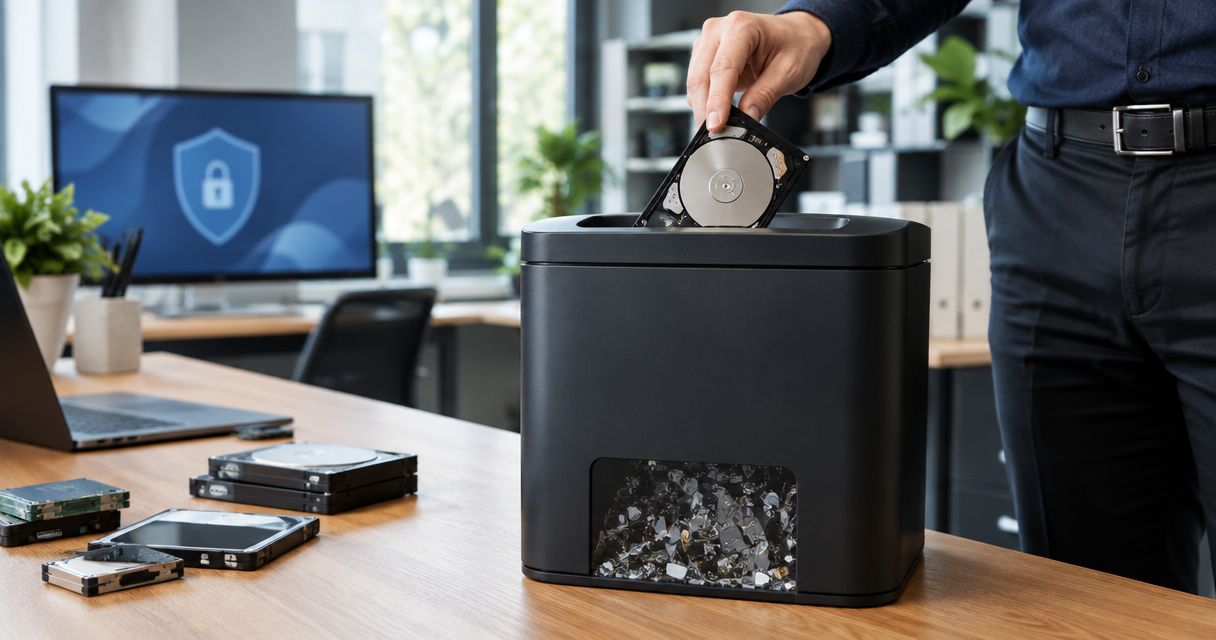
On-site witnessed shredding brings the destruction operation to the bank's designated location. Your authorized representative can observe the agreed process before the destroyed material leaves the site.
This model fits a bank that requires physical destruction before releasing media from its custody. Location alone is not sufficient: the witness needs a defined role, an approved inventory, and a way to record exceptions without interrupting accountability.
On-site witnessed shredding pros:
- Supports observation of the destruction event at your location.
- Avoids transporting intact media to an external destruction facility when destruction is completed before departure.
- Creates an opportunity to resolve inventory discrepancies with bank staff present.
On-site witnessed shredding cons:
- Your premises must support the provider's approved operating and safety arrangements.
- Witnessing requires staff attention and a process for matching presented media to the inventory.
- Equipment suitability still needs checking for each media type.
Before approving an on-site event, agree where media waits, who releases it, and when an item counts as destroyed. Specify how the provider will handle a device that cannot enter the equipment or a drive whose identifier cannot be read.
Do not confuse watching a collection with witnessing destruction. If intact drives leave the site for later processing, assess that stage as an off-site custody transfer, regardless of where the collection began.
Best for: Banks whose approved policy requires witnessing physical destruction before media leaves bank custody.
Verdict: Buy when on-site witnessing is mandatory and the proposed equipment meets your media-specific requirements.
3. Off-site controlled shredding: best for centralized processing
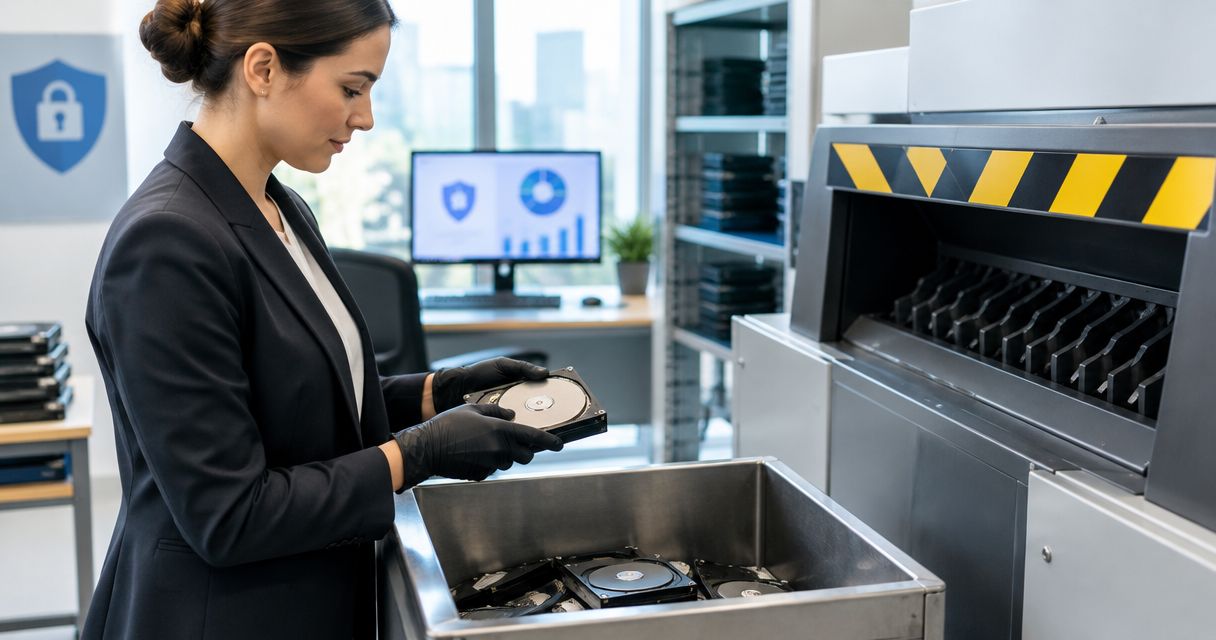
Off-site controlled shredding moves intact media from the bank to a destruction facility. It separates collection from the destruction operation, so transport, receipt, storage, and processing all need defined controls.
Choose this model only when your bank permits intact media to leave its premises. Review the transfer process as closely as the shredder: a clear destruction method does not resolve an unexplained gap in custody.
Off-site controlled shredding pros:
- Supports centralized destruction rather than requiring destruction operations at each collection location.
- Allows collection and destruction-site work to be planned as separate activities.
- Provides a structure for consolidating retirement projects when your policy permits controlled transport.
Off-site controlled shredding cons:
- Intact media passes through additional custody stages before destruction.
- Inventory discrepancies require a documented investigation across the handoff.
- Your bank needs an agreed method for verifying completion without relying solely on collection records.
Ask how the provider records collection, receipt, restricted storage, and destruction. Establish who is responsible for unresolved discrepancies and how your bank will be informed.
For your 2026 review, distinguish a promised destruction process from evidence that the specific job is complete. A collection receipt confirms a handoff; it does not establish that the listed drives were destroyed.
Best for: Banks that approve external transport and prefer destruction at a centralized facility.
Verdict: Buy only after approving the full custody chain and completion evidence.
How we ranked these options
The ranking follows the criteria above: regional service fit, custody control, media coverage, witnessing, asset evidence, and downstream handling. It is a purchasing framework, not a claim that one provider has outperformed others in testing.
The regional option comes first for Greater Boston ITAD planning. On-site shredding takes priority when witnessing before release is mandatory; off-site shredding fits only when your bank accepts controlled transport of intact media. A mandatory policy requirement overrides the table order.
Build the evidence chain before booking collection
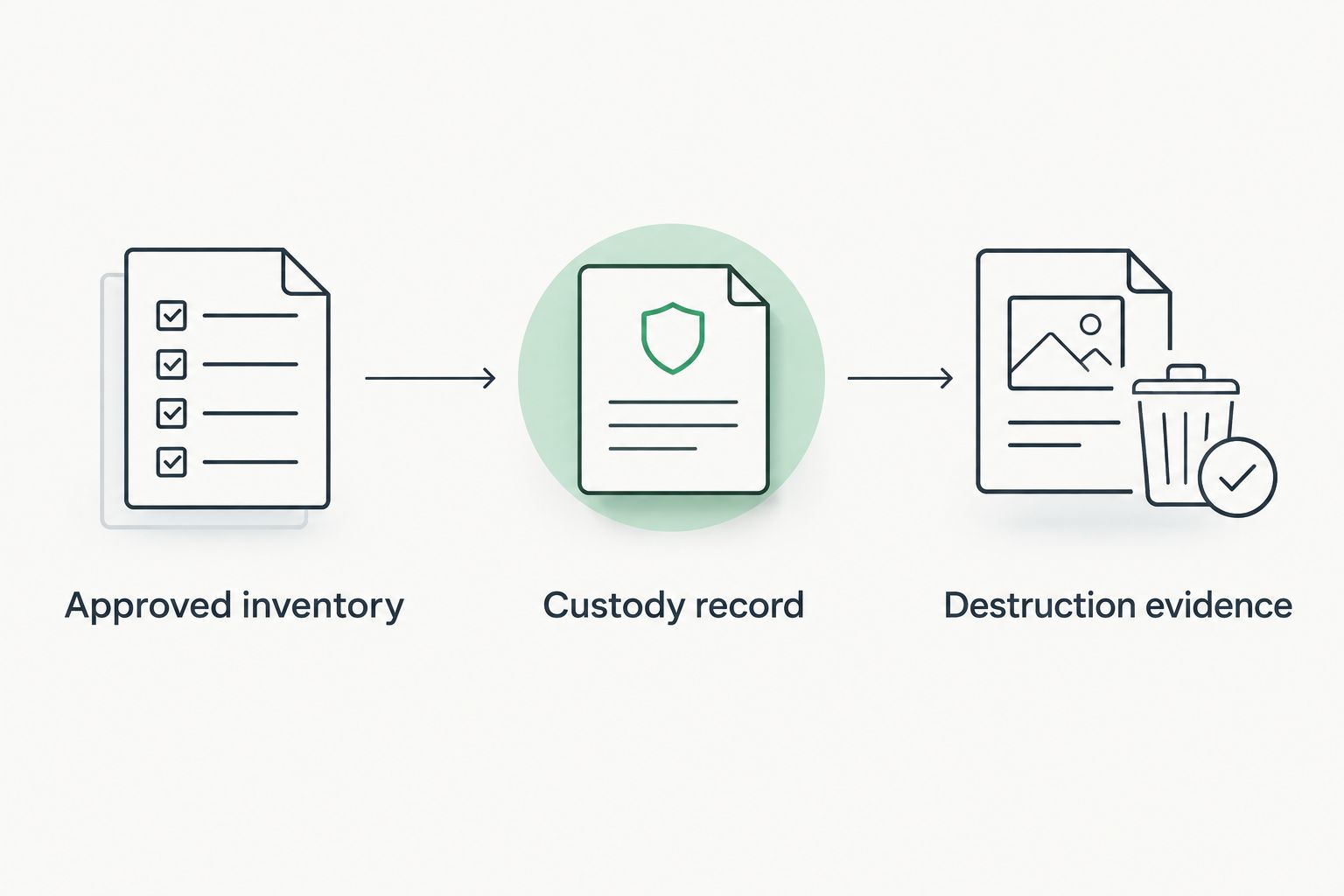
For a 2026 bank retirement project, require 3 linked records: an approved inventory, a custody record, and destruction evidence. This is a recommended documentation structure, not a regulatory minimum.
- Approved inventory: Identify the media released for destruction and record how unreadable or missing identifiers will be handled.
- Custody record: Connect the bank's release to the provider's receipt and subsequent handling.
- Destruction evidence: Connect completed destruction to the released inventory and identify any unresolved items.
Each record should support the next. A complete-looking certificate is not enough if your team cannot connect it to the assets that left the bank.
Before collection, assign an owner for exceptions. That person needs authority to stop release, investigate a mismatch, or request corrected documentation rather than leaving the discrepancy for a later audit.
Use 2 approval checkpoints in your project plan: approve the scope before release, then approve reconciliation before closure. Keep 1 reconciled inventory as the reference record so departments do not close the same project against conflicting asset lists.
Questions to put in your request for proposal
A useful proposal describes the job your bank needs done. Send the same requirements to each candidate so differences remain visible.
- Which storage-media types does the proposed destruction process cover?
- Where does destruction occur, and when does custody transfer?
- How are assets identified at collection and reconciled after destruction?
- What happens to a missing drive, an unreadable identifier, or unsuitable media?
- What can the bank witness, and how is witnessing documented?
- Which subcontractors or downstream parties handle intact media or destroyed material?
- What evidence closes the project, and who resolves discrepancies?
Require written answers. Keep the approved proposal, exceptions, and completion records together so your team can explain the disposition decision without reconstructing it from email.
Which hard drive shredding service should you choose?
Choose on-site witnessed shredding if your bank requires destruction before intact media leaves its custody. Choose off-site controlled shredding only when transport and storage controls meet your approved requirements.
For a Greater Boston project that also includes equipment retirement, start with the regional certified data destruction and IT asset disposition option. Confirm the shredding method first, then compare custody and evidence requirements. Do not select a service model that conflicts with your bank's policy simply because collection is easier.
Discuss your bank's destruction requirements
Ask about certified data destruction and IT asset disposition for your Greater Boston retirement project.
FAQ
What's the best hard drive shredding service for a bank?
The best service is the one that meets your bank's approved media, custody, witnessing, and evidence requirements. Choose on-site shredding when destruction before release is mandatory; assess off-site shredding when controlled transport is permitted.
Is on-site shredding better than off-site shredding for banks?
On-site shredding is the better fit when your bank requires witnessing before intact media leaves its custody. Off-site shredding requires approval of additional transport, receipt, and storage controls.
Does a certificate of destruction prove every drive was destroyed?
A certificate alone does not establish asset-level reconciliation. Require documentation that connects completed destruction to the inventory released by your bank and identifies unresolved exceptions.
Can the same shredding process handle hard drives and solid-state drives?
Do not assume the same process is appropriate for both media types. Require the provider to identify the supported media and the destruction specification for each before your bank approves the scope.
Does RIOS certification replace a bank's destruction requirements?
No. A recycling certification does not replace your bank's written requirements for media destruction, custody, witnessing, and evidence. Evaluate the certification and the proposed destruction scope separately.
Should a bank erase drives before shredding them?
Follow your bank's approved media sanitization and destruction policy. If both erasure and physical destruction are required, document both steps rather than assuming one substitutes for the other.
What should a bank request before booking shredding in 2026?
Request a written scope covering media types, destruction method, location, custody transfers, witnessing, and completion records. Approve exception handling before releasing the media.
One last thing
Keep the asset record open until the evidence reconciles—not merely until the truck leaves. Add a closure condition to your 2026 project plan: every released item must have a documented outcome, and every discrepancy must have an assigned resolution. That turns a collection event into an accountable retirement process.