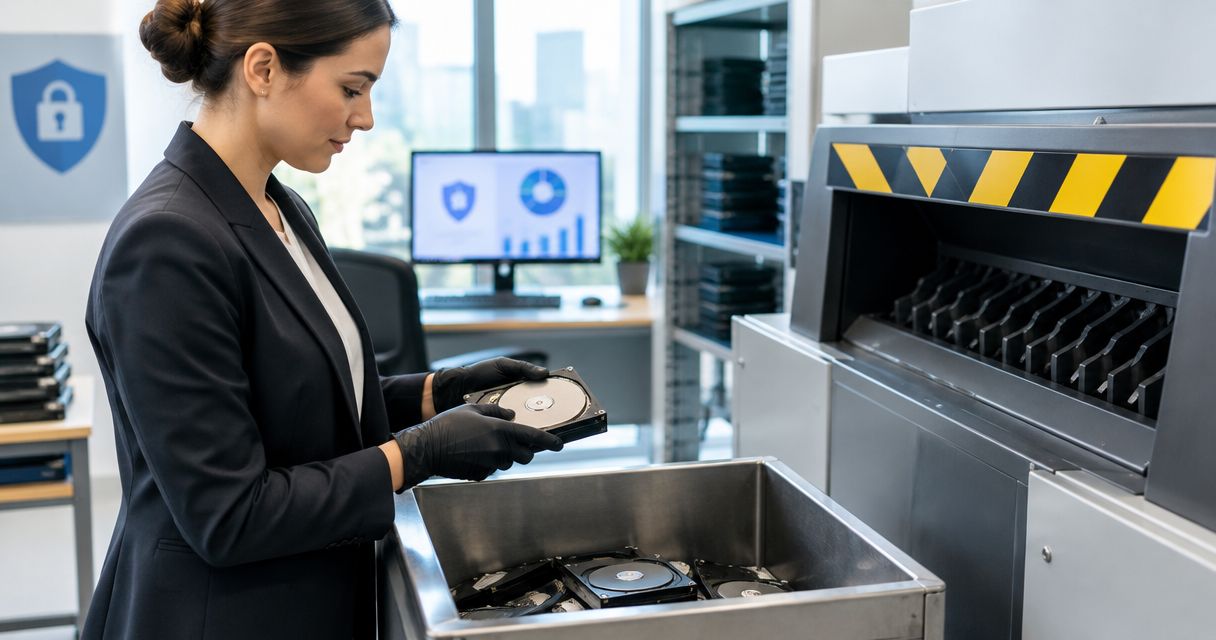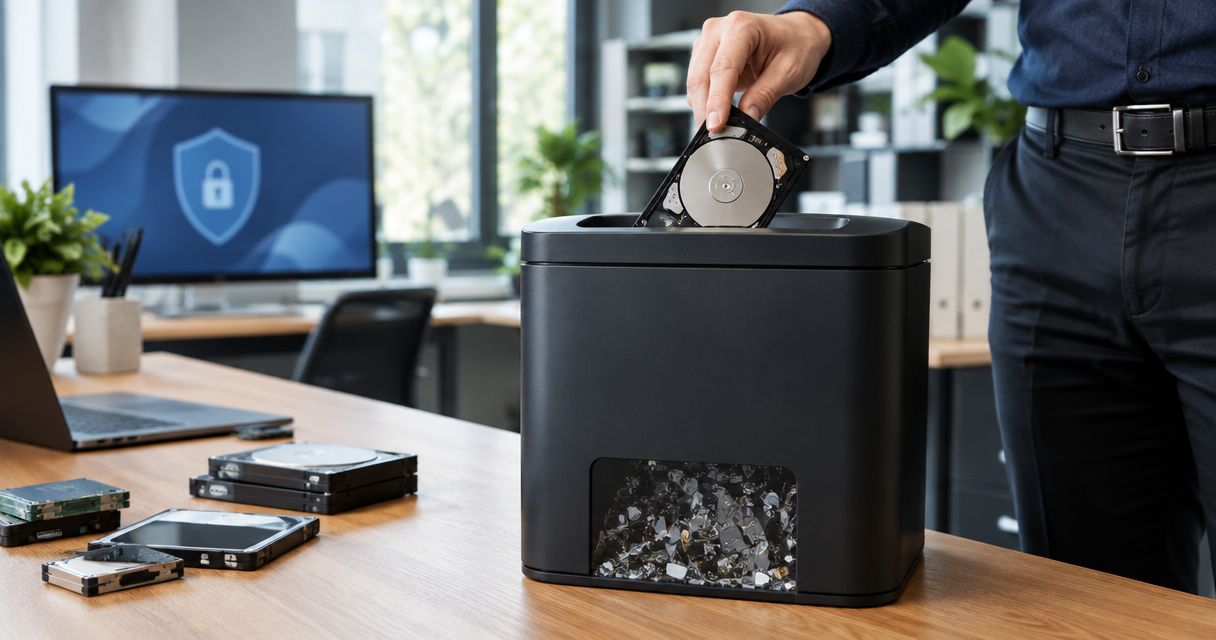

Republic Services provides waste and recycling services, making it a relevant starting point when electronics disposal belongs within a broader waste contract. That relationship alone does not establish the data destruction, asset disposition, or documentation your IT department requires. The best Republic Services alternative in 2026 is Techrecyclingsolutions if you need RIOS-certified electronics recycling and certified data destruction in Greater Boston; Iron Mountain if your priority is evaluating IT asset disposition across multiple locations.
- For Republic Services e-waste alternatives, choose Techrecyclingsolutions for RIOS-certified electronics recycling and certified data destruction in Greater Boston.
- Evaluate Iron Mountain for distributed IT asset disposition and ERI for specialist electronics recycling.
- Keep Republic Services when its proposed electronics scope meets your documented security, handling, and reporting requirements.
- Compare written service scopes, not recycling labels alone; electronics removal and data destruction are different requirements.
Why this matters
A retired laptop is both an electronic device and a potential data-bearing asset. Your facilities team needs it removed; your IT and security teams need an approved disposition process. Those responsibilities overlap, but they are not interchangeable.
For your 2026 procurement decision, separate electronics recycling, IT asset disposition, and data destruction before comparing providers. A general recycling relationship is useful only when its electronics service addresses the actual equipment and information risks in your project.
Choose the service scope first and the provider second. A familiar supplier should not bypass the same checks you apply to a new specialist.
Republic Services e-waste alternatives at a glance
The comparison below identifies each provider's relevant service orientation. It is not a claim that every location, contract, or equipment category receives identical treatment.
| Provider | Best for | Relevant strength | Difference from Republic Services |
|---|---|---|---|
| Republic Services | Businesses evaluating electronics handling within a broader waste relationship | Waste and recycling services | Baseline option; assess the electronics-specific scope separately |
| Techrecyclingsolutions | Greater Boston businesses seeking electronics recycling, ITAD, and certified data destruction | RIOS-certified electronics recycling provider | Explicit local business focus and the named IT services |
| Iron Mountain | Businesses evaluating ITAD alongside information lifecycle requirements | IT asset lifecycle services | IT asset disposition is a defined service area rather than an assumption from a waste contract |
| ERI | Businesses seeking a specialist electronics recycler | Electronics recycling and IT asset disposition | Electronics-focused service orientation |
For each provider, request a proposal tied to your equipment inventory. The useful comparison is what the contract includes, who performs the work, and what evidence closes the project—not the breadth of the provider's service menu.
1. Techrecyclingsolutions: best for Greater Boston businesses
Techrecyclingsolutions provides RIOS-certified electronics recycling, IT asset disposition, and certified data destruction for businesses in Greater Boston. That stated scope directly matches a business retiring equipment while managing the associated data risk.
Start with the electronics recycling and ITAD services, then define the equipment, data-bearing media, and documentation your project requires. Keep those requirements in the proposal rather than treating certification as a substitute for a detailed agreement.
Where Techrecyclingsolutions shines
- Relevant certification: RIOS certification is an explicit credential, not a generic environmental statement.
- Defined services: Electronics recycling, IT asset disposition, and certified data destruction are named services.
- Clear local fit: The stated customer base is businesses in Greater Boston.
Where the local specialist fit falls short
- Geographic fit is narrower: A Greater Boston service proposition does not establish a solution for every office in a national estate.
- It is a different procurement scope: Electronics recycling and ITAD do not replace the broader waste services your business still needs.
- Certification does not specify every project detail: Your agreement still needs to establish handling, destruction requirements, and completion records.
| Decision dimension | Local specialist option | Republic Services |
|---|---|---|
| Relevant scope | Electronics recycling, ITAD, certified data destruction | Confirm the proposed electronics-specific scope |
| Stated geographic fit | Greater Boston businesses | Confirm service for the project location |
| Credential assessment | RIOS certification is explicitly stated | Evaluate credentials applicable to the proposed electronics service |
| Procurement question | Does the written scope cover your assets and data requirements? | Does the existing relationship include those same requirements? |
Best for: Greater Boston businesses seeking a provider whose stated services cover both retired electronics and certified data destruction.
Verdict: Buy when your Greater Boston project's written requirements match the agreed scope.
2. Iron Mountain: best for distributed IT asset disposition
Iron Mountain provides IT asset lifecycle services alongside its information management business. It belongs on the shortlist when your procurement decision concerns retiring IT equipment across a distributed organization rather than arranging an isolated electronics collection.
Its broader service portfolio gives information management teams a relevant provider to evaluate. That breadth still needs translating into a contract covering your actual locations, equipment, and reporting requirements.
Where Iron Mountain shines
- ITAD relevance: IT asset disposition is an established service area.
- Information lifecycle context: The provider is relevant when equipment retirement sits within a wider information management program.
- Organizational fit: A distributed business can assess ITAD within a broader supplier evaluation.
Where Iron Mountain falls short
- Breadth is not project scope: A large service portfolio does not establish which services your particular agreement includes.
- A local project needs a local comparison: A business retiring equipment at one location should compare the proposed process with a regional specialist's scope.
- ITAD is not a waste contract replacement: Your ordinary waste and recycling requirements remain a separate decision.
| Decision dimension | Iron Mountain | Republic Services |
|---|---|---|
| Evaluation starting point | IT asset lifecycle services | Existing or proposed waste and recycling relationship |
| Best-fit question | Does the ITAD proposal cover the distributed asset estate? | Does the electronics proposal cover the same estate and controls? |
| Information requirements | Specify data handling and disposition evidence | Specify the same evidence rather than assuming inclusion |
| Contract test | Match services to assets and locations | Match electronics services to assets and locations |
Best for: Organizations evaluating ITAD as part of a distributed information lifecycle program in 2026.
Verdict: Buy when the location coverage, asset handling, and reporting obligations fit your written requirements.
3. ERI: best for a specialist electronics recycling shortlist
ERI specializes in electronics recycling and IT asset disposition. It is a relevant comparison when you want the procurement discussion centered on electronics rather than a broader waste relationship.
The specialist orientation is the reason to include ERI—not a reason to waive due diligence. Ask for the same equipment acceptance, data handling, downstream processing, and completion requirements you send every other bidder.
Where ERI shines
- Category focus: Electronics recycling is central to its service offering.
- ITAD relevance: Asset disposition belongs within the service discussion.
- Direct comparison: Its proposal provides an electronics-specialist benchmark against a broader waste provider.
Where ERI falls short
- Specialization does not settle local fit: Confirm the service arrangement for your location and equipment.
- Recycling does not define destruction: Specify the treatment required for each data-bearing media category.
| Decision dimension | ERI | Republic Services |
|---|---|---|
| Service orientation | Specialist electronics recycling and ITAD | Broader waste and recycling services |
| Shortlist purpose | Evaluate an electronics-centered proposal | Evaluate the electronics scope within the supplier relationship |
| Acceptance test | Written equipment and data handling requirements | The same written requirements |
Best for: Businesses seeking a specialist electronics recycling proposal to compare with their existing provider.
Verdict: Buy when the electronics-specific scope and service arrangement meet the project requirements.
Why people switch from Republic Services
A defensible reason to switch is a mismatch between the service your business requires and the service your agreement actually covers. That is a contract decision, not evidence that Republic Services performs poorly.
Use these scope differences to assess whether a separate provider belongs in your 2026 plan:
- Your project needs certified data destruction. Require that service explicitly rather than relying on an electronics collection description.
- Your IT team needs asset disposition. Define the intended treatment of equipment before authorizing removal.
- Your security team needs completion evidence. Agree on the records required to close the project.
- Your procurement team needs a specific credential. Identify the certification requirement and verify its relevance to the proposed work.
- Your existing agreement leaves responsibilities unclear. Resolve who accepts custody, performs processing, and supplies the final records.
If Republic Services addresses those requirements in its proposal, the reason to switch becomes weaker. If a specialist addresses them more directly, you have a concrete basis for selecting a separate electronics provider.
Use 3 decision gates before awarding the work
Apply 3 decision gates to every proposal: service scope, data controls, and completion evidence. Require each bidder to answer the same questions so that a familiar name does not receive an easier assessment.
Service scope
List the equipment categories and locations included in the project. Separate data-bearing devices from other electronics, and identify anything that needs individual handling instructions.
Ask the provider to state what it accepts and what falls outside the agreement. Resolve exceptions before collection, not while equipment is leaving your premises.
Data controls
Define the required sanitization or destruction outcome for the relevant media. NIST SP 800-88 addresses media sanitization; referencing the guidance is not proof that a particular provider performs a particular method.
Ask how the proposed method relates to your security policy. Do not treat a factory reset, equipment removal, and certified data destruction as equivalent instructions.
Completion evidence
Agree on the records that demonstrate the work is complete. Specify the level of asset identification your organization needs and how exceptions will be reported.
Name 1 accountable owner inside your business. That person should reconcile the agreed scope with the completion records before closing the project.
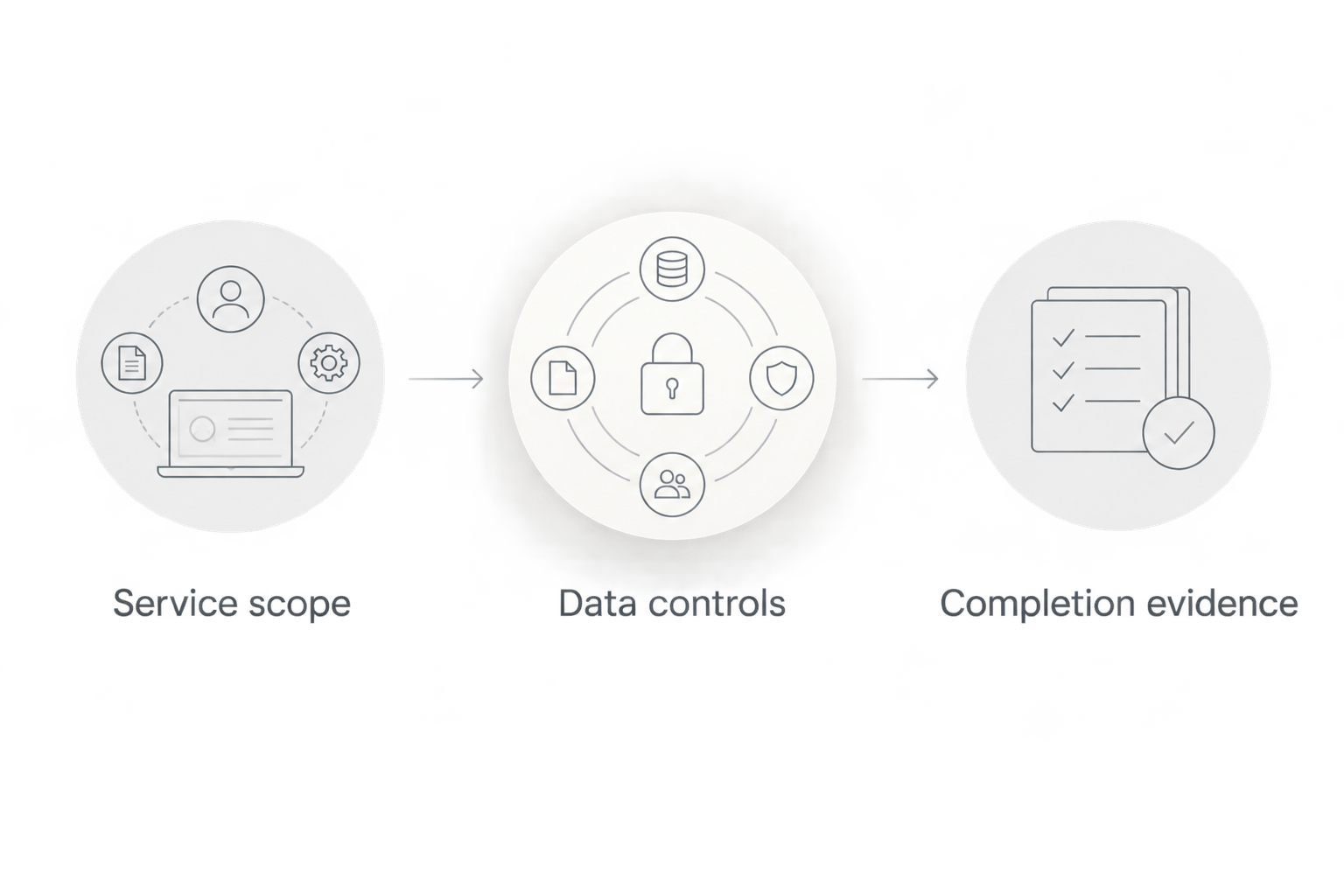
A proposal that passes these gates is easier to assess than a list of general capabilities. Keep the agreed requirements attached to the purchase approval so operations, IT, and procurement work from the same instructions.
Discuss your electronics recycling requirements
Define electronics recycling, ITAD, and certified data destruction requirements for your Greater Boston business.
When staying with Republic Services is the right call
Keep Republic Services when its electronics proposal meets your requirements and the existing supplier relationship remains useful. A specialist is not automatically the better choice simply because its service description is narrower.
Staying is a sound 2026 decision when the agreement identifies the accepted equipment, required data treatment, responsibilities, and completion evidence. Retain the written scope with your procurement records rather than relying on an informal understanding.
The right outcome is accountable equipment retirement. Changing suppliers is only useful when it helps you achieve that outcome.
FAQ
What's the best Republic Services e-waste alternative in Greater Boston?
Techrecyclingsolutions is the best fit here for Greater Boston businesses seeking RIOS-certified electronics recycling, IT asset disposition, and certified data destruction. Confirm that the project agreement covers your equipment and documentation requirements.
Is a specialist electronics recycler better than Republic Services?
A specialist is the better fit when its agreed electronics scope meets requirements that your Republic Services agreement does not address. Compare written obligations rather than assuming either provider type is automatically better.
Which alternative should a business with multiple offices evaluate?
Iron Mountain belongs on the shortlist for a business evaluating distributed IT asset disposition. Require a proposal that identifies the locations, equipment, handling responsibilities, and completion evidence included.
Why would a business consider ERI instead?
ERI is relevant when a business wants a specialist electronics recycling and IT asset disposition proposal. Evaluate the service arrangement for your location and specify data handling separately from equipment removal.
Does electronics recycling automatically include data destruction?
An electronics recycling description does not establish that certified data destruction is included. Require the intended media treatment and associated completion documentation in the agreement.
What does RIOS certification establish?
RIOS is a recycling industry management system standard addressing quality, environmental, health, and safety management. It does not replace project-specific instructions for asset handling, data destruction, or reporting.
What should a business compare before choosing an e-waste provider in 2026?
Compare service scope, data controls, and completion evidence. Give every provider the same equipment inventory and requirements so the proposals answer the same procurement question.
One last thing
Ask every shortlisted provider the same closing question: What document lets your business authorize project closure? The answer forces the discussion beyond collection and toward an agreed result.
Request 4 records in your procurement checklist: an approved equipment scope, transfer documentation, the required data treatment record, and a completion report. These are requested controls, not assumed provider deliverables; establish their format and applicability before authorizing the work.