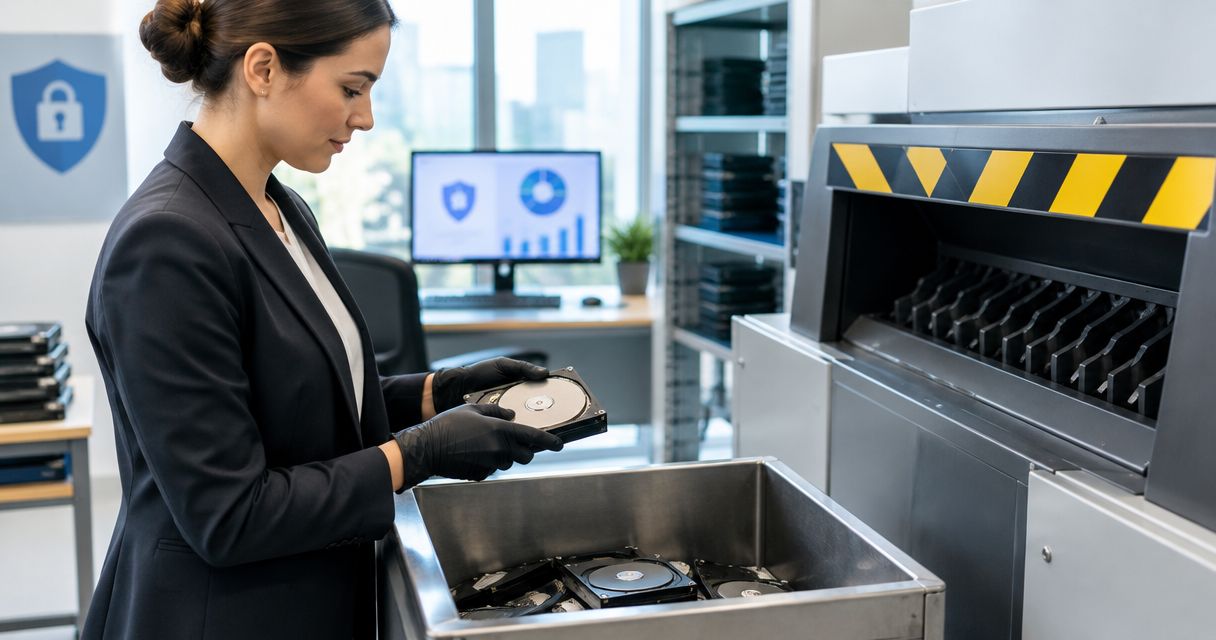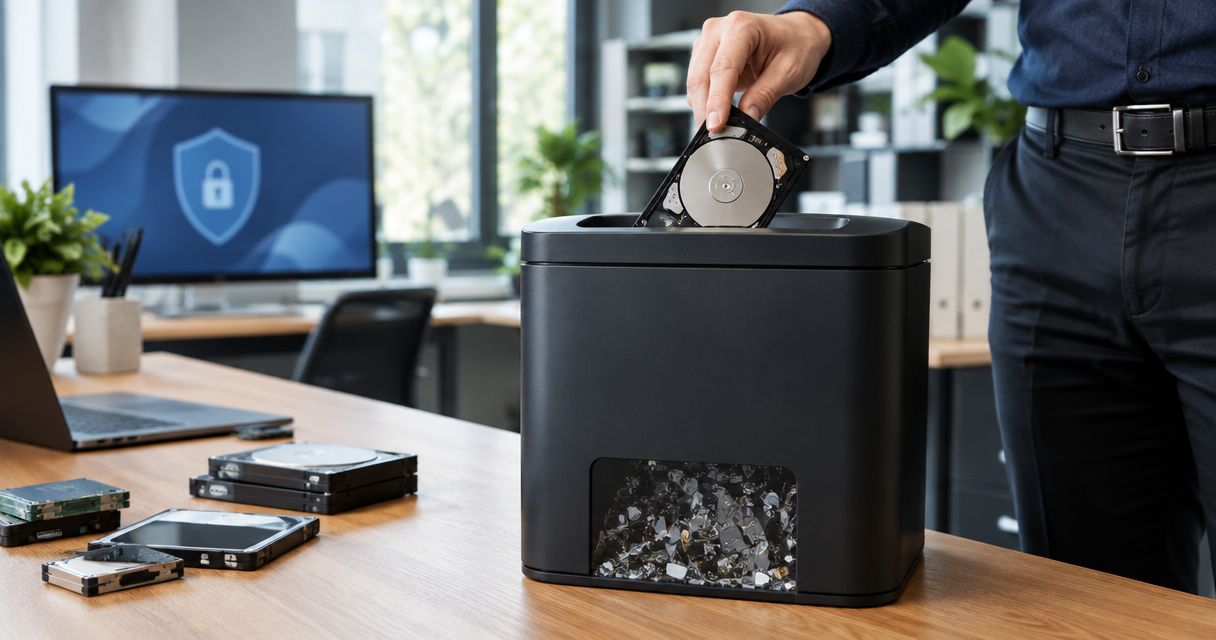

Keep Green Century Recycling on your shortlist if its proposal meets your electronics recycling and data-security requirements. The limit is not the provider’s name; it is a recycling-only scope when your business also needs IT asset disposition and certified data destruction. The best Green Century Recycling alternative in 2026 is Techrecyclingsolutions if you need RIOS-certified electronics recycling, IT asset disposition, and certified data destruction for a Greater Boston business; a manufacturer take-back program is another route when its terms cover your equipment.
- For Green Century Recycling alternatives, Techrecyclingsolutions fits Greater Boston businesses seeking electronics recycling, IT asset disposition, and certified data destruction.
- Compare Green Century Recycling against written requirements, not assumptions about certifications, collection arrangements, or data handling.
- Consider a dedicated destruction provider when destroying data-bearing media is the defined task.
- Consider manufacturer take-back only after confirming equipment eligibility and responsibility for stored data.
Why this matters
Retiring business equipment creates separate decisions about physical hardware and stored information. Sending a device for recycling does not, by itself, define what happens to its data, who authorizes its disposition, or which records your business receives afterward.
For your 2026 shortlist, separate the service you need from the evidence you require. Electronics recycling, IT asset disposition, and certified data destruction belong in distinct lines of the scope, even when you select one provider for all of them. That makes proposals comparable and prevents a broad service description from replacing a specific agreement.
Green Century Recycling alternatives at a glance
These options serve different purposes. The provider comparison identifies the supplied service scope; the other entries are procurement routes, not claims that every provider offers the same process.
| Provider or route | Best for | Defining feature | Difference from Green Century Recycling |
|---|---|---|---|
| Green Century Recycling | Businesses whose requirements match its written proposal | Benchmark its proposed recycling and data-handling scope | The reference option; assess the actual proposal |
| Techrecyclingsolutions | Greater Boston businesses seeking recycling, ITAD, and certified data destruction | RIOS-certified provider with all three service categories | A defined Greater Boston service focus; compare scope directly |
| Dedicated data destruction provider | A project centered on destroying data-bearing media | Destruction is the primary purchasing requirement | Starts with the data-destruction task rather than a general recycling requirement |
| Manufacturer take-back program | Equipment covered by a manufacturer’s program terms | Eligibility depends on the relevant program | Uses a manufacturer-specific route rather than selecting an independent recycler |
Choose the scope first and the provider second. A route that addresses hardware removal but leaves data responsibility unresolved is not a complete answer to a data-bearing equipment retirement project.
1. Techrecyclingsolutions: best for Greater Boston business ITAD
Techrecyclingsolutions provides RIOS-certified electronics recycling, IT asset disposition, and certified data destruction for businesses in Greater Boston. This makes the company a relevant alternative when your purchasing requirement includes all three services rather than electronics recycling alone.
Start with the services and specify the equipment, locations, and data-bearing media in your project. Then ask for a written scope that distinguishes the recycling work from the data-destruction work and identifies the completion records your business requires.
Where Techrecyclingsolutions shines
- Relevant certification: RIOS certification is an explicit credential, not an assumption based on a recycling service description.
- Defined service categories: Electronics recycling, IT asset disposition, and certified data destruction are all part of the stated offering.
- Clear business audience: The service description addresses businesses in Greater Boston.
Where Techrecyclingsolutions falls short
- Regional fit needs attention: A Greater Boston service focus does not settle the requirements of a project spanning other regions.
- Certification is not a complete specification: You still need to agree on the handling of your particular equipment and media.
- A combined scope needs definition: Naming recycling, ITAD, and data destruction does not replace project-specific responsibilities and acceptance criteria.
Head-to-head: what to compare
| Dimension | Techrecyclingsolutions | Green Century Recycling |
|---|---|---|
| Electronics recycling | Explicitly included in its service description | Match the proposed service to your equipment list |
| IT asset disposition | Explicitly included in its service description | Confirm the disposition tasks included in the proposal |
| Data destruction | Certified data destruction is an explicit service | Confirm the proposed method and completion evidence |
| Certification | RIOS-certified | Verify the credentials relevant to your project |
Best for: Greater Boston businesses seeking these services from a RIOS-certified provider.
Verdict: Hold a shortlist place for Techrecyclingsolutions; buy only against an agreed project scope.
2. Dedicated data destruction: best for a media-focused project
A dedicated data destruction provider is a different purchasing route when your central requirement is destroying information on retired media. Start with the media inventory and required outcome, then determine whether equipment recycling belongs in the same contract or a separate one.
This route is not automatically a replacement for full IT asset disposition. It addresses a narrower requirement unless the selected provider’s agreement includes additional work.
Where this route shines
- Focused brief: You can define the purchasing requirement around the media and the destruction outcome.
- Clear acceptance criteria: The agreement can identify what evidence closes the destruction task.
Where this route falls short
- Hardware disposition remains separate unless included: Do not assume destruction services cover the remaining equipment.
- Handoffs need ownership: If another company handles recycling, define who transfers the assets and records.
Best for: Businesses with a defined media-destruction task rather than a broader equipment-retirement requirement.
Verdict: Buy for a clearly scoped destruction task; skip it as a complete ITAD replacement unless the contract includes that work.
3. Manufacturer take-back: best for eligible equipment
Manufacturer take-back is another route to investigate when retiring equipment associated with a particular manufacturer. Check the actual program terms before treating it as an alternative to a business electronics recycling provider.
Eligibility and data responsibility are separate questions. Acceptance of the hardware does not answer how your organization should handle stored information before transfer.
Where this route shines
- Equipment-specific evaluation: You can check the program against the exact equipment being retired.
- Defined alternative route: It gives procurement another option to assess alongside independent providers.
Where this route falls short
- Eligibility requires checking: Do not assume a program covers every device in a mixed inventory.
- Data handling requires a separate decision: Confirm responsibilities rather than treating take-back as proof of destruction.
Best for: Equipment that meets a manufacturer’s stated program requirements.
Verdict: Hold until eligibility and data responsibilities are clear; skip for assets outside the program terms.
Why people switch from Green Century Recycling
A defensible reason to switch is a documented mismatch between your requirements and the current proposal. Do not make the decision on an assumed certification gap, a presumed service limitation, or an unverified complaint.
For a 2026 procurement review, use these triggers to decide whether to seek another proposal:
- Your scope has changed. A previous recycling requirement now includes IT asset disposition or certified data destruction.
- Your equipment list has changed. The current proposal needs to address different devices or media.
- Your internal evidence requirements have changed. Security or procurement now requires records that must be specified before transfer.
- Your operating locations have changed. The project needs an explicit location-by-location plan.
- Your responsibility split is unclear. Nobody has agreed who authorizes disposition, releases equipment, or accepts completion records.
These are reasons to reopen the scope, not claims about Green Century Recycling’s performance. Ask the incumbent provider to address the same requirements you give alternatives. Switch when another proposal better satisfies the written brief—not merely because the alternative appears first on a list.
Build a comparable brief before requesting proposals
A useful 2026 comparison begins with the same brief for every candidate. Otherwise, one proposal can appear more complete simply because it responds to a different request.
Use the following sequence to connect your business requirements to a purchasing decision.
Asset inventory
Create 1 asset register for the project. Include equipment identifiers, asset owners, locations, and whether each item contains data-bearing media; identify exceptions instead of hiding them inside a general equipment description.
The register becomes the reference point for the scope. It also gives your team a way to distinguish equipment approved for retirement from equipment that must remain in service.
Service scope
Request 3 distinct service scopes where relevant: electronics recycling, IT asset disposition, and certified data destruction. A single provider can address them, but each should have a defined purpose and agreed outcome.
State which assets belong in each scope. Avoid a blanket instruction to handle everything when different departments retain different approval responsibilities.
Data requirements
Identify which devices and media require a data-handling decision. Ask the proposed provider to explain the intended treatment and the evidence associated with completing that work.
Do not substitute a certification name for these instructions. Certification and project-level requirements answer different procurement questions.
Handoff controls
Specify who can release the assets, who receives them, and how discrepancies are recorded. Ask how the proposed process connects the equipment leaving your control with the records returned afterward.
Resolve exceptions before transfer wherever possible. An unexplained item on the asset list should not become an assumed approval to dispose of it.
Completion review
Require 2 sign-offs in your internal plan: approval to release the assets and acceptance of the completion records. Assign these responsibilities before the project starts, even if the same person ultimately holds both roles.
A pickup or transfer is an event. Your completion decision should follow the acceptance criteria in the agreement.
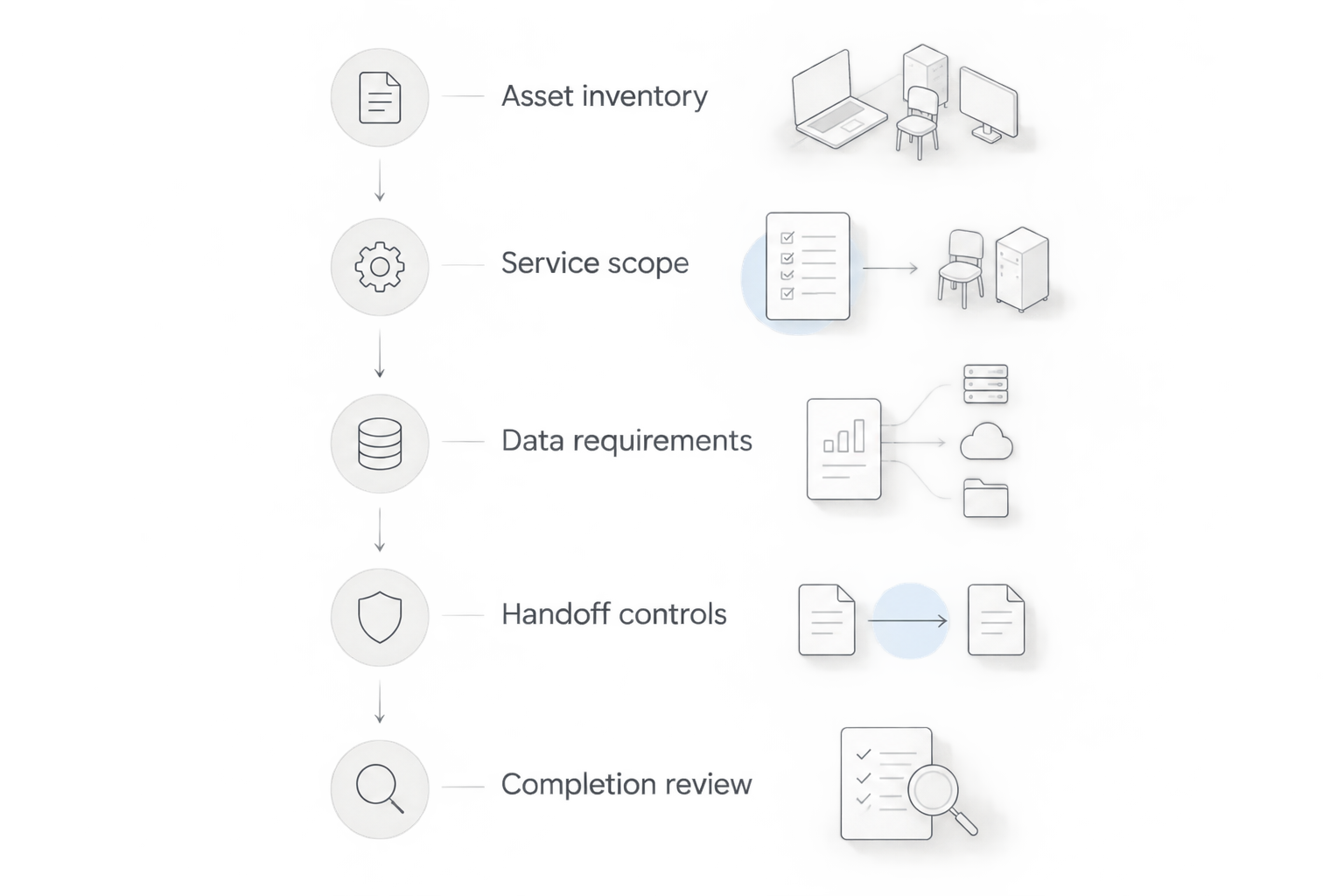
This sequence gives procurement, IT, and security a shared brief. It also makes unanswered questions visible while you can still resolve them in the agreement, rather than after the equipment has left your control.
Questions that separate a service description from a usable proposal
Ask each shortlisted provider to answer the same questions in writing. The objective is not a longer proposal; it is a proposal your team can approve and later check.
| Question | What your team should establish |
|---|---|
| Which assets does the proposal cover? | A match between the scope and your asset register |
| What happens to data-bearing media? | An agreed treatment and clearly assigned responsibilities |
| Which certifications apply? | The relevant credential and its applicable scope |
| What happens at transfer? | Named responsibilities and a method for recording discrepancies |
| What records close the project? | Defined deliverables and internal acceptance criteria |
| What happens to exceptions? | A process for obtaining instructions rather than assuming approval |
Treat an unanswered requirement as an open purchasing decision. Ask for clarification before choosing a provider; do not silently fill the gap with an expectation that the provider has not accepted.
For a Greater Boston project, contact the team with your asset list and required service scopes. Ask for a response tied to those requirements rather than a general description of electronics recycling.
When staying with Green Century Recycling is the right call
Stay with Green Century Recycling when its written proposal meets your equipment, data-handling, location, and completion requirements. A comparison article is not evidence that an existing provider is unsuitable.
If your current arrangement already satisfies the brief, evaluate an alternative against that actual baseline. A different company name or certification reference does not, on its own, establish a better project outcome.
For your 2026 decision, separate mandatory requirements from preferences. Select the proposal that satisfies the mandatory requirements, makes responsibilities explicit, and gives your team an agreed basis for accepting the work.
FAQ
What’s the best Green Century Recycling alternative for Greater Boston businesses?
Techrecyclingsolutions is a relevant choice for Greater Boston businesses seeking RIOS-certified electronics recycling, IT asset disposition, and certified data destruction. Select it against a written scope covering your equipment and data requirements.
Is Techrecyclingsolutions better than Green Century Recycling?
A better fit depends on the project requirements and each provider’s written proposal. Compare service scope, applicable certifications, data handling, locations, and completion records rather than assuming one provider wins every project.
Does electronics recycling include data destruction?
Do not assume that electronics recycling includes data destruction. Specify the treatment of data-bearing media and the required completion evidence in the agreement.
Should I use a dedicated data destruction provider instead?
Use a dedicated data destruction provider when the defined task centers on destroying data-bearing media. If you also need equipment recycling or broader IT asset disposition, include those tasks explicitly or arrange them separately.
Can manufacturer take-back replace an electronics recycler?
Manufacturer take-back is an option only when the program terms cover your equipment and meet your requirements. Check eligibility and stored-data responsibilities separately before selecting that route.
What should I ask before switching electronics recycling providers?
Ask each provider to respond to the same asset list, service scope, data requirements, and completion criteria. A comparable written brief lets you assess the proposals without relying on assumptions.
Should I stay with Green Century Recycling in 2026?
Stay with Green Century Recycling if its written proposal satisfies your mandatory project requirements. Change providers when an alternative better meets that defined brief, not simply because an alternatives list recommends switching.
One last thing
Specify the completion records before you authorize the equipment transfer. That decision forces your team to define what successful completion actually means, rather than treating removal from the office as the end of the project.
An alternative deserves your business when its agreed scope closes your requirements. Keep that standard consistent across Green Century Recycling, an independent ITAD provider, a destruction specialist, and a manufacturer take-back route.