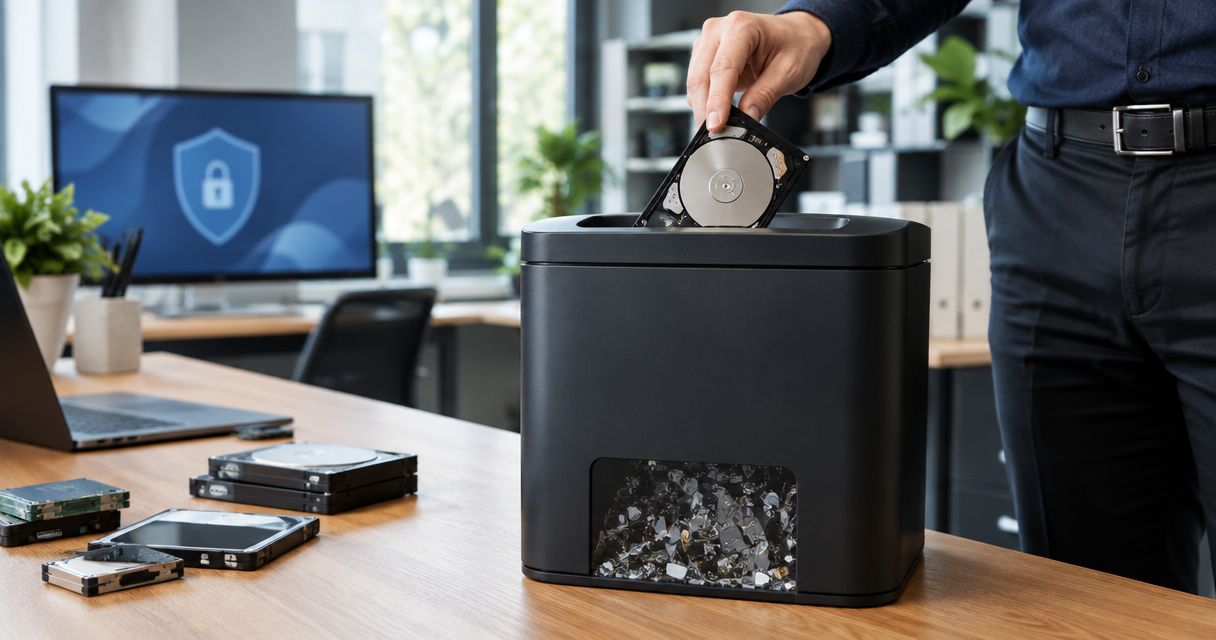

Best overall data destruction services compliance standard: NIST SP 800-88, applied through documented media sanitization. Best for media that must not be reused: verified physical destruction; best for projects that prohibit intact media leaving your premises: on-site destruction.
- For data destruction services compliance standard selection, use NIST SP 800-88 to specify media sanitization requirements.
- Physical destruction suits media that must not return to service; require asset-level evidence.
- Techrecyclingsolutions provides RIOS-certified electronics recycling, IT asset disposition, and certified data destruction for Greater Boston businesses.
- RIOS certification addresses recycling operations; it does not replace a media-specific sanitization specification.
Why this matters
Techrecyclingsolutions is a fit for Greater Boston businesses seeking RIOS-certified electronics recycling and certified data destruction. You can review Techrecyclingsolutions as a local service option, then qualify the destruction method and documentation against your own requirements.
For 2026 procurement, distinguish the technical standard, the applicable regulation, and the recycler's certification. These answer different questions: how data is sanitized, what obligations apply to your organization, and how recycling operations are managed.
This ranking compares service scopes, not competing vendors or independently tested results. Choose the scope that matches your assets and restrictions; do not treat the order as a universal compliance hierarchy.
What makes the best compliance-focused data destruction service
Use these criteria before comparing proposals:
- Media-specific methods: Require a defined treatment for each storage technology, rather than one generic promise covering every device.
- Disposition intent: Decide whether assets will be reused, resold, recycled, or physically destroyed before approving treatment.
- Custody controls: Specify who can access media, where work occurs, and how transfers are recorded.
- Verifiable results: Require evidence of completed treatment and a documented route for failures or exceptions.
- Reconciled records: Match the assets released to the assets reported as processed, including serial numbers where applicable.
- Certification scope: Check what each credential actually covers. A recycling certification is not evidence that a particular drive was sanitized.
Make these acceptance conditions in your 2026 statement of work. A proposal that names a standard but leaves the method, exceptions, and reporting undefined is not ready for approval.
Data destruction service scopes at a glance
| Rank and service scope | Best for | Compliance reference or control | Standout feature | Key limitation |
|---|---|---|---|---|
| 1. NIST-aligned sanitization | Storage approved for reuse | NIST SP 800-88 media sanitization guidance | Connects treatment to media and information sensitivity | Alignment must be demonstrated, not merely advertised |
| 2. Verified physical destruction | Media prohibited from returning to service | NIST SP 800-88 destruction guidance | Makes the storage media unusable | Eliminates media reuse and requires suitable destruction specifications |
| 3. On-site destruction | Policies prohibiting intact media transport | Custody requirements plus an appropriate destruction specification | Keeps intact media at your premises until treatment | Location alone does not establish effective destruction |
| 4. Managed IT asset disposition | Mixed equipment retirement projects | Asset controls, sanitization requirements, and disposition records | Coordinates different asset destinations | Requires clear rules for every device and exception |
| 5. RIOS-certified electronics recycling | Equipment confirmed free of data-bearing media | RIOS recycling management requirements | Addresses downstream electronics recycling operations | Recycling certification alone does not demonstrate data sanitization |
1. NIST-aligned sanitization: best for approved storage reuse
NIST SP 800-88 provides guidance for media sanitization. A service specified against that guidance should connect the selected method to the media, the sensitivity of the information, and the intended disposition.
For reusable equipment, request the proposed sanitization method before authorizing release. Do not assume deleting files, formatting a drive, or reinstalling an operating system establishes that sensitive information is unrecoverable.
NIST-aligned sanitization pros:
- Provides a recognized technical reference for your specification.
- Supports reuse when an appropriate method succeeds.
- Gives your acceptance review a defined technical basis.
NIST-aligned sanitization cons:
- A provider's claim of alignment does not prove successful treatment.
- Failed or unsupported media needs a separate disposition decision.
Best for: Businesses retaining, redeploying, or transferring storage that their policies permit to be reused.
For your 2026 contract, name the applicable guidance, approved methods, required evidence, and failure procedure. Ask how the provider establishes successful completion and which records identify the affected media.
Verdict: Buy NIST-aligned sanitization when reuse is authorized and treatment results are documented.
2. Verified physical destruction: best for non-reusable media
Physical destruction renders storage media unusable through an appropriate destructive process. Specify the treatment for the actual media rather than accepting the word destruction as a complete technical requirement.
A visibly damaged computer enclosure is not proof that its internal storage was destroyed. Your acceptance criteria must address the data-bearing components, including removable storage identified during equipment intake.
Verified physical destruction pros:
- Provides a disposition route when media reuse is prohibited.
- Addresses media that cannot complete an approved reusable sanitization process.
- Supports direct reconciliation between identified media and destruction records.
Verified physical destruction cons:
- Prevents further use of the destroyed media.
- Requires media-appropriate processing; superficial damage is insufficient evidence.
Best for: Organizations with explicit destruction requirements or media that fails the approved sanitization process.
Ask how the provider handles different storage technologies and confirms completion. Require the final report to distinguish completed destruction from items held, rejected, or awaiting further action.
Do not prescribe an arbitrary fragment size without a governing requirement. The specification should come from the applicable standard, contract, or approved security policy.
Verdict: Buy verified physical destruction when reuse is prohibited or approved sanitization cannot be completed.
3. On-site destruction: best for intact-media transport restrictions
On-site destruction changes where treatment occurs: media is processed at your premises rather than transported intact to another facility. Its strongest use case is an explicit custody requirement, not a general assumption that on-site work is automatically more compliant.
You still need an appropriate method, controlled handling, asset identification, and completion records. Witnessing equipment enter a machine does not replace reconciliation of the assets submitted.
On-site destruction pros:
- Supports policies prohibiting intact media from leaving your premises.
- Allows authorized staff to observe the agreed process.
- Reduces the need to transfer intact media between locations.
On-site destruction cons:
- Requires suitable access, staging, and coordination at your location.
- Does not independently establish the adequacy of the destruction method.
Best for: Projects with a documented requirement to destroy media before it leaves a controlled site.
Define the point at which custody transfers, who records asset identifiers, and how exceptions remain secured. Specify what happens if an item cannot be processed during the visit.
Verify that any shortlisted provider actually offers this service. A general data destruction service description does not establish on-site capability.
Verdict: Buy on-site destruction for a defined custody restriction; skip it as a substitute for technical evidence.
4. Managed IT asset disposition: best for mixed retirement projects
Managed IT asset disposition coordinates the retirement of business technology across different destinations. A mixed project needs explicit decisions about reuse, sanitization, destruction, and recycling rather than a single instruction to remove equipment.
Techrecyclingsolutions offers IT asset disposition and related services for Greater Boston businesses. Qualify the proposed project scope against your inventory, security requirements, and reporting needs before authorizing work.
Managed IT asset disposition pros:
- Brings different asset destinations into one retirement plan.
- Allows reusable equipment and destruction-required media to follow separate instructions.
- Creates a basis for reconciling the complete project inventory.
Managed IT asset disposition cons:
- ITAD is a service category, not a standalone compliance certification.
- Ambiguous destination rules create unresolved exceptions at project close.
Best for: Businesses retiring a mixed estate rather than a clearly defined batch of storage media.
Separate equipment records from storage-media records where a device contains multiple data-bearing components. Require approval before a provider changes an asset's agreed disposition route.
The service name alone does not establish tracking, resale arrangements, or reporting detail. Put each required deliverable in the statement of work.
Verdict: Buy managed IT asset disposition when different assets require different approved outcomes.
5. RIOS-certified electronics recycling: best for cleared equipment
RIOS is a recycling management system standard covering quality, environmental, and occupational health and safety requirements. It addresses recycling operations; it is not a substitute for specifying and verifying data sanitization.
Techrecyclingsolutions provides RIOS-certified electronics recycling alongside IT asset disposition and certified data destruction. Keep those service descriptions separate when writing your requirements so that recycling approval does not become an assumed data-security approval.
RIOS-certified electronics recycling pros:
- Provides a defined management-system reference for recycling operations.
- Addresses environmental and worker-safety considerations alongside quality.
- Fits equipment whose data-bearing components have already been addressed.
RIOS-certified electronics recycling cons:
- Does not independently prove that a particular device was sanitized.
- Does not replace your organization's sector-specific obligations.
Best for: Equipment confirmed free of data-bearing media, or equipment whose media has completed an approved treatment process.
Request the current certificate and confirm its scope covers the operation you are evaluating. Separately identify the evidence required for any data-bearing equipment included in the collection.
Verdict: Buy RIOS-certified recycling for the recycling requirement; skip it as your only data destruction criterion.
Match the standard to your legal obligations
For 2026 procurement, treat NIST SP 800-88 as technical guidance, not a blanket certificate of legal compliance. Your applicable obligations still depend on the information, your role, and the governing rules or contracts.
The HIPAA Security Rule's disposal provision, 45 CFR §164.310(d)(2)(i), addresses final disposition of electronic protected health information and the hardware or electronic media on which it is stored. Healthcare organizations must connect their disposal procedures to that obligation rather than rely only on a vendor's certificate title.
The FTC Safeguards Rule, 16 CFR Part 314, applies to covered financial institutions under the FTC's jurisdiction and includes secure disposal requirements. Do not assume every financial-services organization has the same regulator or disposal requirements.
Use your legal and security teams to identify the controlling obligations. Then translate them into methods, custody conditions, records, and acceptance criteria the provider can actually deliver.
Set three acceptance gates before releasing equipment
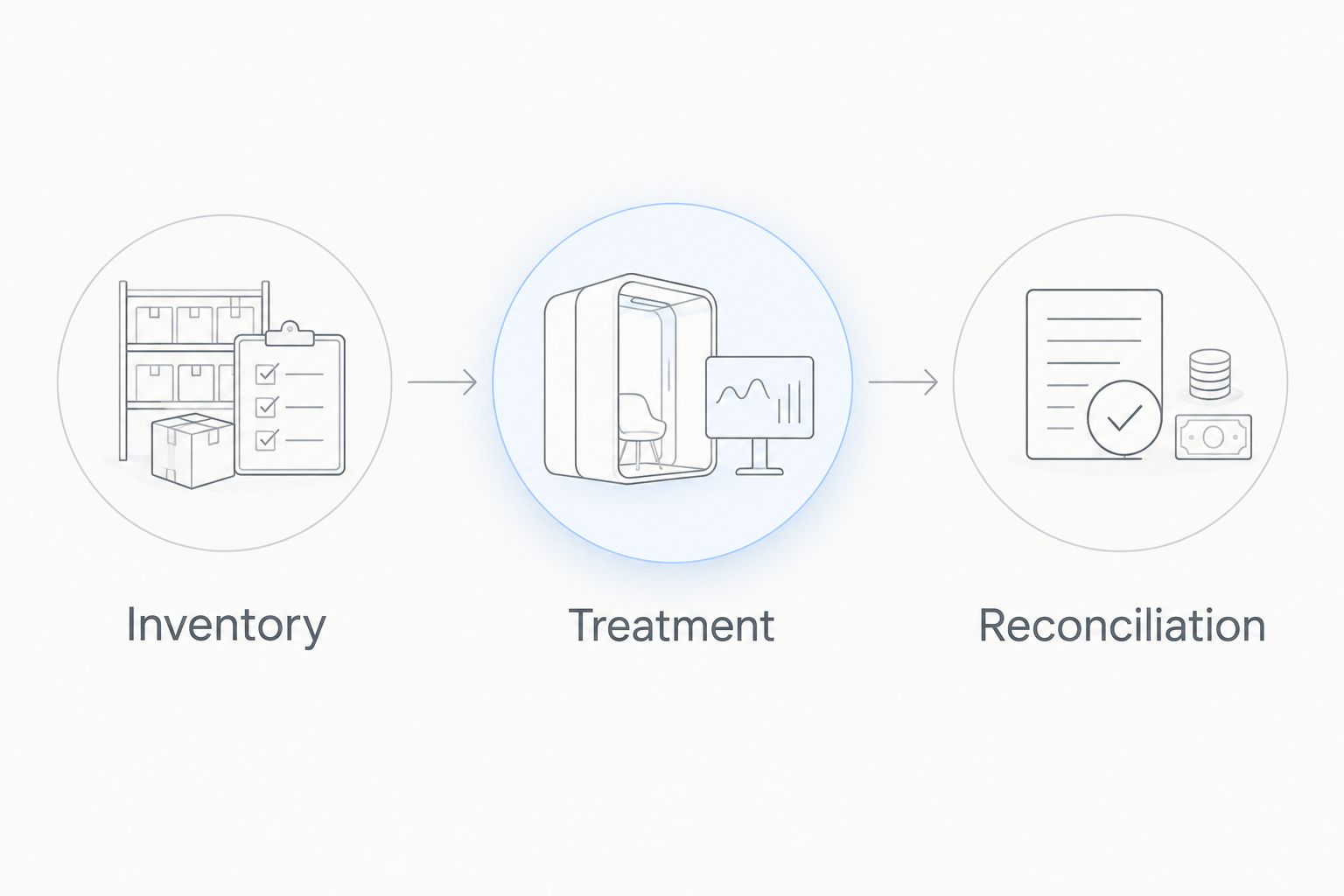
Use 3 acceptance gates for your 2026 retirement project: inventory, treatment, and reconciliation. These are recommended project controls, not a claim that every regulation mandates an identical workflow.
- Inventory: Approve the asset list, identify data-bearing components, and record unresolved ownership or storage questions.
- Treatment: Assign an approved method and destination, including instructions for failed or unsupported media.
- Reconciliation: Match completed records to the released inventory and resolve every exception before project closure.
Keep 2 inventory views where needed: the equipment list and its associated storage-media list. Assign 1 accountable owner to approve exceptions, so unresolved items do not disappear between IT, facilities, and procurement.
A certificate is part of the evidence package, not the entire package. Require enough identification and treatment detail to connect the document to the assets your organization released.
Discuss your retirement requirements
Define electronics recycling, IT asset disposition, and certified data destruction requirements for your business.
How these service scopes were ranked
The ranking starts with the media-treatment decision, then addresses custody, mixed-project coordination, and recycling. It prioritizes a clear specification and verifiable completion over broad compliance language.
This is a requirements-based buying guide, not a vendor performance test. On-site destruction moves to the top of your shortlist when intact-media transport is prohibited; managed ITAD becomes the better starting point when the central problem is coordinating a mixed estate.
Which data destruction service should you choose?
Start with documented, media-appropriate sanitization specified against NIST SP 800-88. Choose physical destruction where reuse is prohibited, and add on-site delivery only when your custody requirements call for it.
For a Greater Boston service shortlist, Techrecyclingsolutions offers electronics recycling, IT asset disposition, and certified data destruction. Confirm the proposed method, service location, reporting, and exceptions before approving the project.
FAQ
What's the best data destruction services compliance standard in 2026?
NIST SP 800-88 is the starting technical reference for specifying media sanitization. Select the method according to the media, information sensitivity, intended disposition, and applicable obligations.
Is RIOS certification the same as data destruction certification?
No. RIOS addresses recycling management requirements; it does not independently establish that a particular storage device received effective data sanitization.
Is physical destruction better than sanitization for reuse?
Physical destruction is appropriate when media must not return to service, while approved sanitization supports permitted reuse. Choose according to your disposition policy and the treatment suitable for the media.
Does HIPAA require every hard drive to be shredded?
No. The HIPAA Security Rule requires disposal policies and procedures but does not impose universal shredding of every hard drive. The organization must select appropriate safeguards for the electronic protected health information involved.
Is on-site destruction automatically more compliant?
No. On-site destruction addresses the location and custody of treatment, but compliance still depends on the applicable requirements, suitable methods, and evidence of completion.
What should a certificate of destruction identify?
Require a certificate to connect the completed work to your assets and agreed treatment. Specify asset identifiers, treatment details, completion information, and exception reporting in the contract rather than assuming a standard template includes them.
Can electronics recycling replace data destruction?
No. Recycling and data destruction address different requirements. Identify and appropriately treat data-bearing media before accepting recycling as the final disposition.
One last thing
An asset can leave your building without leaving your open exception list. Make project closure depend on reconciled records, not collection completion; unresolved media requires an explicit decision from your designated owner.