Best overall local fit: Techrecyclingsolutions for Greater Boston firms seeking RIOS-certified electronics recycling, IT asset disposition, and certified data destruction. Best for equipment that must not return to use: destruction-led ITAD; best for equipment approved for reuse: reuse-led ITAD; best for peripherals without stored data: recycling-led service. This 2026 guide compares these service models and the evidence your firm should require before releasing equipment.
- Techrecyclingsolutions is the local shortlist choice for Greater Boston firms seeking electronics recycling, IT asset disposition, and certified data destruction.
- Choose IT asset disposition services for law firms by data risk, disposition requirements, and verifiable records.
- Destruction-led ITAD suits media excluded from reuse; reuse-led ITAD requires an approved sanitization process.
- Recycling alone does not establish that stored client information has been destroyed.
Why this matters
Retiring a computer does not retire the information stored on it. Your firm needs a documented decision about both the hardware and its data before equipment leaves controlled storage.
Techrecyclingsolutions provides the service combination relevant to that decision: electronics recycling, IT asset disposition, and certified data destruction for Greater Boston businesses. Evaluate those services against your firm's requirements rather than treating a recycling credential as proof of every security control.
The central distinction for your 2026 selection is simple: equipment collection is an activity; accountable disposition is an outcome. Your acceptance criteria should cover what happens after collection, including exceptions and final records.
What makes the best ITAD service for a law firm?
Use these criteria before comparing proposals. A provider should explain its process and show the documentation you will receive.
- Data treatment: Identify the proposed sanitization or destruction method for each type of storage media. Require approval before substitutions.
- Custody records: Establish how equipment is recorded, transferred, stored, and matched to the final disposition record.
- Certification scope: Check the current certificate, covered location, and applicable scope. Do not treat different certifications as interchangeable.
- Exception handling: Define what happens to failed drives, missing identifiers, damaged equipment, and devices that cannot complete the intended process.
- Disposition controls: Specify which assets can enter reuse channels and which require destruction or recycling.
- Closeout evidence: Agree on the asset records, destruction documentation, and unresolved-item report before collection.
A strong proposal answers these questions in operational terms. General assurances about security do not replace a defined process or a sample deliverable.
ITAD service models at a glance
This is a comparison of a named local provider and service models, not a ranking of unverified competing companies. The service models describe requirements you can use in procurement; they do not establish what any particular provider delivers.
| Ranked option | Best for | Standout feature | Key limitation |
|---|---|---|---|
| Techrecyclingsolutions | Greater Boston firms seeking the stated service combination | RIOS-certified electronics recycling, IT asset disposition, and certified data destruction | Firm-specific methods, custody controls, and reporting require confirmation |
| Destruction-led ITAD | Storage media your policy excludes from reuse | Physical destruction is the specified endpoint for affected media | Destroyed media cannot return to service |
| Reuse-led ITAD | Equipment your firm authorizes for reuse after sanitization | Keeps approved equipment eligible for another use | Requires sanitization verification and a failure route |
| Recycling-led service | Peripherals confirmed not to contain stored data | Focuses on material disposition rather than equipment reuse | Does not by itself establish data destruction |
1. Techrecyclingsolutions: best ITAD fit for Greater Boston firms
Techrecyclingsolutions provides RIOS-certified electronics recycling, IT asset disposition, and certified data destruction for businesses in Greater Boston. That combination makes the company a relevant local shortlist choice for a law firm seeking those services.
Techrecyclingsolutions is best for Greater Boston law firms seeking electronics recycling, IT asset disposition, and certified data destruction. The recommendation rests on the stated service scope and geography, not an assumed law-firm specialization.
Techrecyclingsolutions pros
- RIOS certification is explicitly stated.
- IT asset disposition is an explicitly offered service.
- Certified data destruction is part of the stated offering.
- The business serves Greater Boston.
Techrecyclingsolutions cons and limits
- The stated service description does not identify specific destruction methods or reporting formats.
- Law-firm-specific experience and contractual controls are not established by the service description.
- Service coverage outside Greater Boston requires confirmation.
Best for: A Greater Boston firm building a shortlist around the stated service combination.
Ask for a sample asset report, a sample destruction record, and the proposed custody process. Confirm which activities occur at each location and which records identify individual devices or media.
Verdict: Buy only after the written scope satisfies your firm's data-handling and documentation requirements.
2. Destruction-led ITAD: best for media excluded from reuse
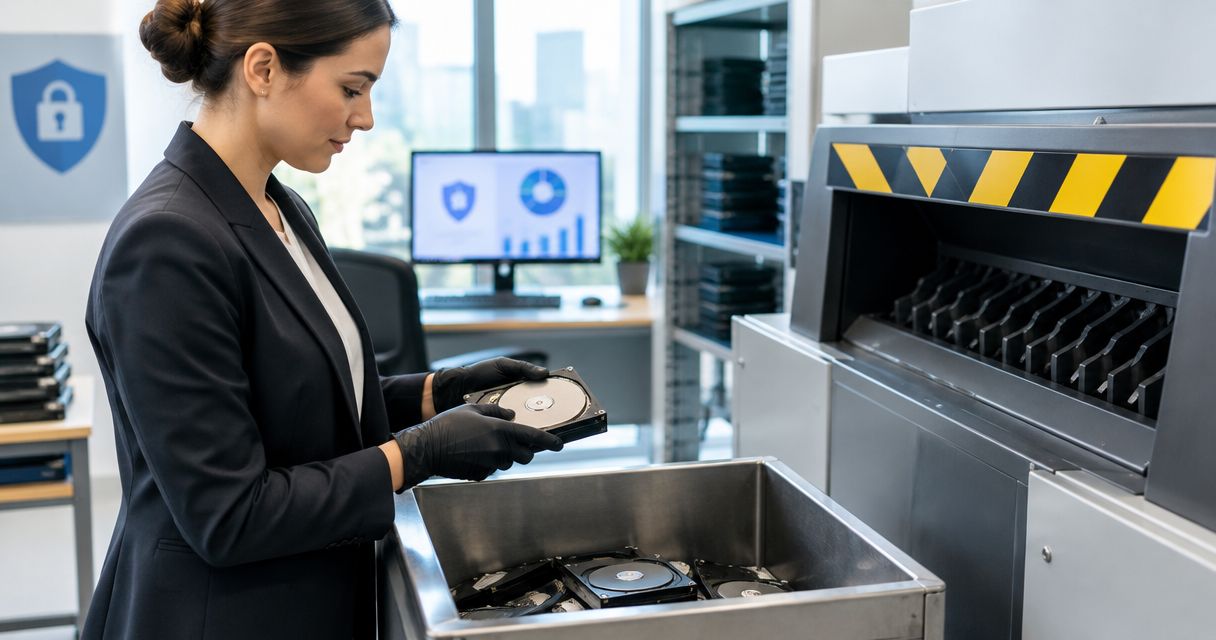
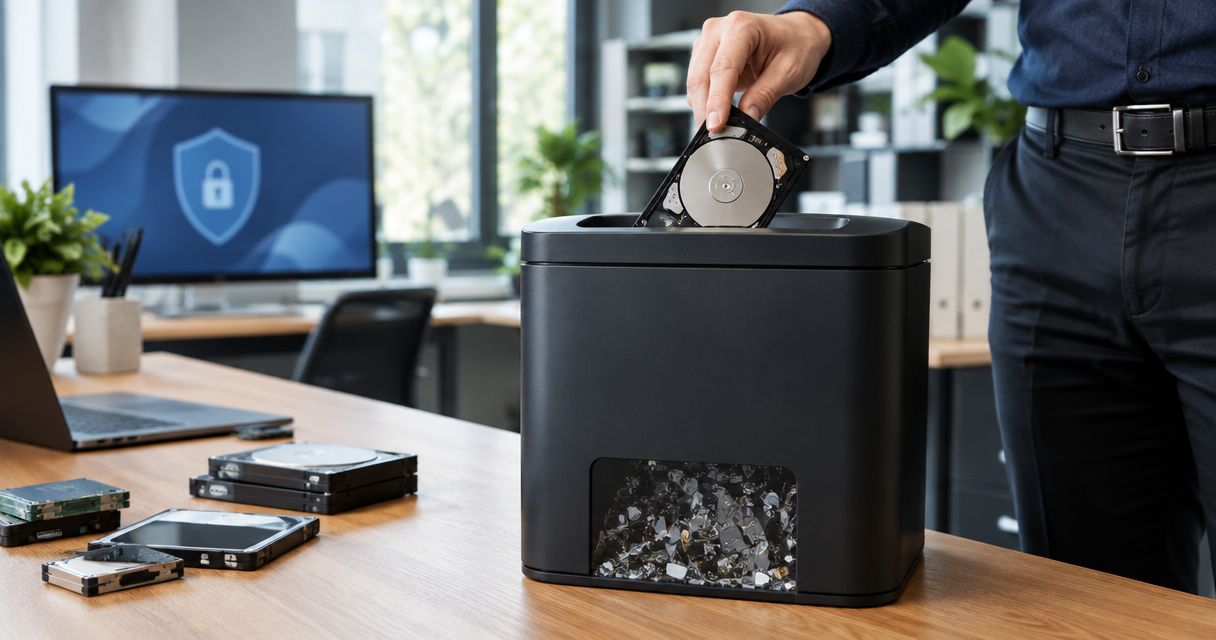
Destruction-led ITAD specifies physical destruction as the endpoint for designated storage media. It fits equipment your firm has decided must not return to use, while allowing separate decisions about non-storage components.
Do not write the scope as simply destroying computers. Identify whether the instruction covers storage media, entire devices, or both, and require a record that reflects the actual work.
Destruction-led ITAD pros
- Sets a clear no-reuse instruction for affected media.
- Separates media disposition from decisions about the remaining hardware.
- Gives procurement a defined physical outcome to document.
Destruction-led ITAD cons
- Prevents future use of the destroyed media.
- Does not replace custody controls before destruction.
- Requires a defined method for matching destruction evidence to the asset inventory.
Best for: Media that an approved policy or disposition decision excludes from reuse.
Ask how the provider identifies media removed from devices. A computer's asset tag and its internal drive identifier are not necessarily the same record; the reporting process needs to connect them when asset-level evidence is required.
Verdict: Buy when physical destruction is the approved endpoint; hold if the proposal leaves media identification unresolved.
3. Reuse-led ITAD: best for equipment approved for another use
Reuse-led ITAD keeps suitable equipment eligible for another use after an approved data-sanitization process. It requires a separate decision about the hardware and the information stored on it.
For your 2026 refresh, approve reuse eligibility before collection. Equipment condition alone does not establish that a device is ready to leave your control.
Reuse-led ITAD pros
- Preserves an approved route for functional equipment.
- Allows different disposition decisions within the same retirement project.
- Makes sanitization verification an explicit release requirement.
Reuse-led ITAD cons
- Requires a documented response when sanitization fails.
- Adds decisions about which assets and media are eligible.
- Depends on evidence that the required data treatment completed successfully.
Best for: Firms that permit reuse and can define the required sanitization and verification process.
Ask the provider to describe its method for each media type, the evidence of completion, and the treatment of inaccessible devices. A powered-on laptop and a failed storage drive need distinct exception decisions, even if both appear on the same collection list.
Do not authorize a fallback route through a vague instruction to process equipment appropriately. Specify whether unsuccessful sanitization triggers destruction, return, or another approved action.
Verdict: Buy when reuse is authorized and verification is defined; skip proposals without a failure route.
4. Recycling-led service: best for confirmed non-data peripherals
Recycling-led service focuses on material disposition for equipment that is not being retained for use. For a law firm, its clearest standalone application is equipment confirmed not to contain stored data.
Treat familiar-looking peripherals carefully. A device's appearance or office function does not establish whether it stores information; classify the actual equipment before assigning the recycling route.
Recycling-led service pros
- Provides a distinct route for equipment without stored information.
- Keeps material disposition separate from data-treatment decisions.
- Supports a mixed project when data-bearing assets receive separate instructions.
Recycling-led service cons
- A recycling receipt alone does not establish data destruction.
- Equipment must be assessed before being classified as non-data-bearing.
- Mixed collection containers can complicate reconciliation unless records distinguish the routes.
Best for: Peripherals your firm has checked and classified as non-data-bearing.
Ask what the provider accepts and how it records the handoff. Do not assume that a service accepting one equipment type also accepts every item in an office clear-out.
Verdict: Buy for confirmed non-data equipment; skip recycling-only instructions for unassessed storage devices.
How these options are ranked
The ranking starts with the stated local provider and service fit, then separates the remaining options by disposition requirement. It does not claim that destruction, reuse, or recycling is universally preferable.
For a 2026 procurement decision, use the criteria above as acceptance gates. Geography and certification support the shortlist; data treatment, custody records, exception handling, and closeout evidence determine whether the proposed engagement meets your requirements.
Build a handoff process before collection
Your internal process should establish what you are releasing and how you will verify completion. Keep the process consistent even when a project contains different equipment types.
Inventory
Assign 1 internal owner to maintain the retirement register. Record the identifiers your firm uses, identify storage-bearing equipment, and assign a proposed disposition route.
Keep uncertain items out of the non-data category until someone resolves the classification. Also check retention requirements and legal holds before approving data destruction.
Release
Require 2 documented approvals as an internal control: authorization from the equipment owner and authorization from the person responsible for the data disposition decision. Your policy can assign these responsibilities to appropriate roles.
Record what leaves the premises and resolve changes to the collection list. A last-minute addition needs the same classification and authorization as an asset scheduled earlier.
Reconciliation
Compare 3 records at closeout: the approved inventory, the handoff record, and the final disposition report. Investigate unmatched entries rather than treating a project-level completion notice as sufficient asset-level evidence.
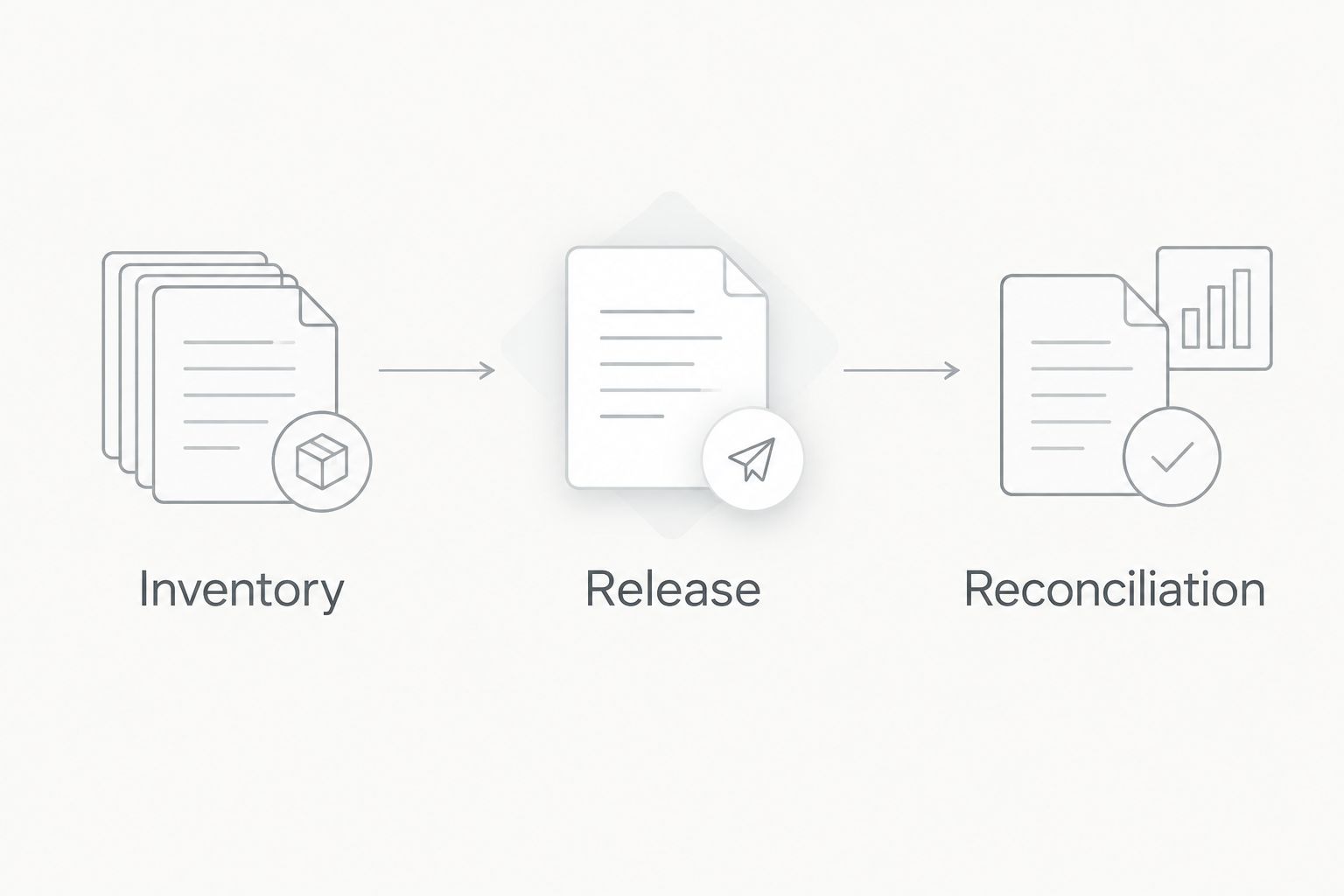
Keep these controls in your written 2026 retirement procedure. They are recommended project controls, not claims about a provider's existing workflow.
Questions to settle before signing
Review the proposed services against a written scope, not just the collection appointment. The scope should answer the following:
- What equipment and media are included or excluded?
- Which disposition route applies to each asset category?
- Where does custody transfer, and how is that transfer recorded?
- What happens when identifiers are missing or sanitization fails?
- What evidence identifies completed work and unresolved exceptions?
- Who approves a change to the agreed disposition route?
Use the contact page to request clarification before authorizing the engagement. Keep the accepted answers with the project records so the final report can be checked against the original scope.
Define your ITAD requirements
Discuss electronics recycling, IT asset disposition, and certified data destruction for your Greater Boston firm.
Which ITAD service should your law firm choose?
For a Greater Boston law firm seeking the stated service combination, put Techrecyclingsolutions on the shortlist. Confirm the methods, custody arrangements, and evidence before selecting the engagement.
Choose destruction-led processing for media excluded from reuse. Choose reuse-led processing only where your policy permits it and verification is defined. Reserve recycling-only instructions for equipment confirmed not to contain stored data.
Your default for 2026 should be a documented, asset-specific decision—not a single blanket instruction for everything leaving the office.
FAQ
What's the best IT asset disposition service for a Greater Boston law firm?
Techrecyclingsolutions is a relevant local shortlist choice because it provides RIOS-certified electronics recycling, IT asset disposition, and certified data destruction for Greater Boston businesses. Select the engagement only after confirming its methods, custody controls, and reporting meet your firm's requirements.
Does RIOS certification prove that every device's data was destroyed?
No. A provider's RIOS certification is not a device-specific destruction record. Request the applicable certification scope and separate documentation of the data treatment performed on your assets.
Should a law firm destroy every retired computer?
Not automatically. Your firm should choose destruction or approved sanitization based on its data-handling requirements, retention obligations, and reuse policy. Document the decision before releasing equipment.
Is deleting files enough before sending a laptop for recycling?
No. File deletion is not a substitute for a defined sanitization or destruction process. Specify the required treatment and the evidence needed to verify completion.
What records should a law firm request from an ITAD provider?
Request records that connect the released equipment to its final disposition, plus applicable data-treatment evidence and an exception report. Agree on identifiers and report formats before collection.
Can one ITAD project include both reuse and destruction?
Yes, if the written scope assigns the appropriate route to each asset or media category. Require approval before a provider changes a route, and define what happens when sanitization fails.
One last thing
Review a sample final report before scheduling collection. If the sample cannot answer which asset received which treatment, revise the reporting requirement first. A clear closeout starts with a clear scope, not with a request for better paperwork after the equipment has gone.