Best overall for Greater Boston businesses: Techrecyclingsolutions, a RIOS-certified provider of electronics recycling, IT asset disposition, and certified data destruction. Best for manufacturer-specific returns: manufacturer takeback; best for equipment that remains useful: internal redeployment with a recycling partner. This 2026 guide compares business e waste recycling programs by equipment scope, data handling, and accountability.
- Techrecyclingsolutions is the best-supported Greater Boston choice here for e waste recycling programs combining electronics recycling, ITAD, and certified data destruction.
- Manufacturer takeback fits eligible equipment; verify business eligibility and data-handling requirements before shipping.
- Internal redeployment preserves useful equipment but requires ownership, security checks, and an eventual recycling route.
- Choose a documented enterprise ITAD procurement process when multiple sites need consistent retirement requirements.
Why this matters
A business recycling decision is also an information-security and asset-management decision. A device leaving your office can contain company data, retain an inventory assignment, or require a documented disposition outcome.
For your 2026 retirement plan, separate those responsibilities before selecting a collection route. Electronics recycling addresses retired equipment; IT asset disposition covers the retirement process; data destruction addresses information on storage media. A collection arrangement alone does not establish that all those requirements are covered.
What makes the best e waste recycling programs
Use these criteria before comparing providers or program types:
- Relevant credentials: Verify the certification, its current status, and the operation it covers. Do not treat a certification name as proof of every individual service.
- Equipment fit: Confirm accepted equipment, exclusions, and any preparation requirements against your actual inventory.
- Data handling: Establish which devices contain storage, who controls them, and how sanitization or destruction will be documented.
- Custody records: Specify what evidence you need when equipment changes hands and when the retirement work is complete.
- Disposition fit: Decide whether equipment should remain in use, enter a manufacturer return route, or proceed through recycling and data destruction.
- Operational responsibility: Assign ownership for preparation, transfer, exceptions, and final record reconciliation.
The best program is the one whose documented scope matches your equipment and information-security requirements. For a 2026 comparison, ask every candidate to answer the same questions. Otherwise, a simple collection proposal and a documented retirement service can appear equivalent when they cover different work.
Business recycling options at a glance
These are different program models, not interchangeable vendors. The named provider has an explicitly stated service scope; the other entries describe routes your business can evaluate.
| Rank and option | Best for | Standout feature | Key limitation |
|---|---|---|---|
| 1. Techrecyclingsolutions: electronics recycling and ITAD | Greater Boston businesses seeking the stated services together | RIOS-certified electronics recycling, ITAD, and certified data destruction | Confirm project-specific equipment, logistics, and reporting requirements |
| 2. Manufacturer takeback | Eligible manufacturer-specific equipment returns | A return route tied to the equipment manufacturer | Eligibility and data responsibilities require separate verification |
| 3. Internal redeployment with a recycling partner | Equipment your organization can still use | Retains useful equipment within the business | Requires reassignment controls and an eventual retirement route |
| 4. Enterprise ITAD procurement | Businesses standardizing retirement across multiple sites | A shared specification for custody, data handling, and reporting | A procurement framework does not itself provide the service |
| 5. Collection-only recycling | Clearly scoped equipment without storage media | Focuses the engagement on collection and recycling | Does not establish data-destruction coverage |
1. Techrecyclingsolutions: best for Greater Boston service coordination
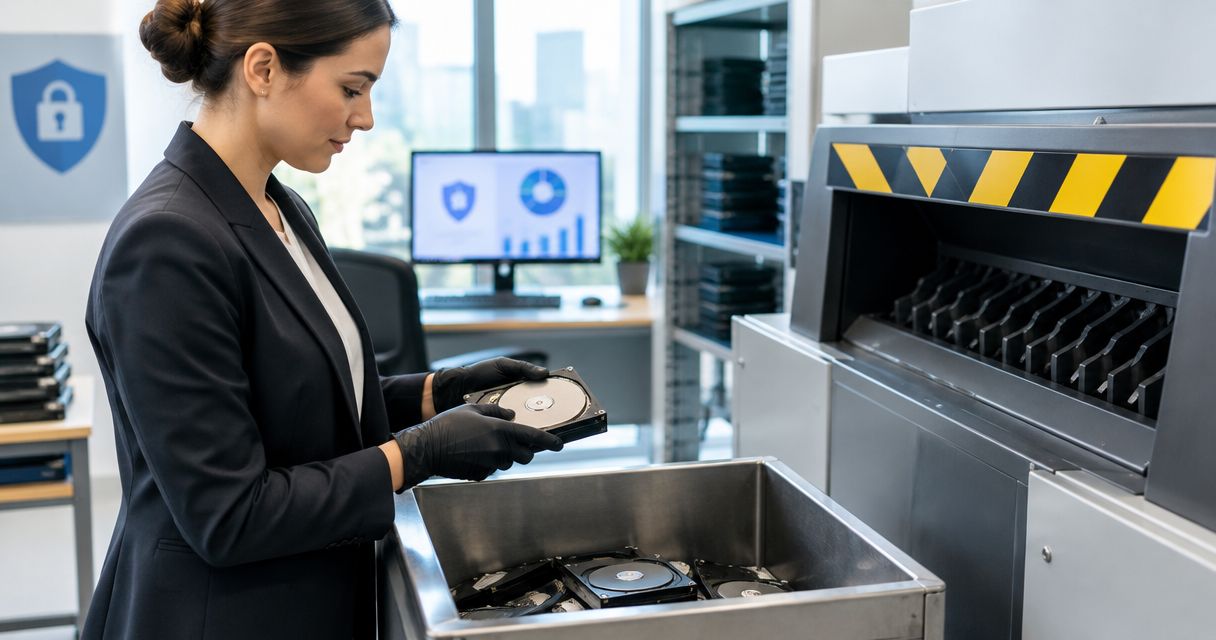
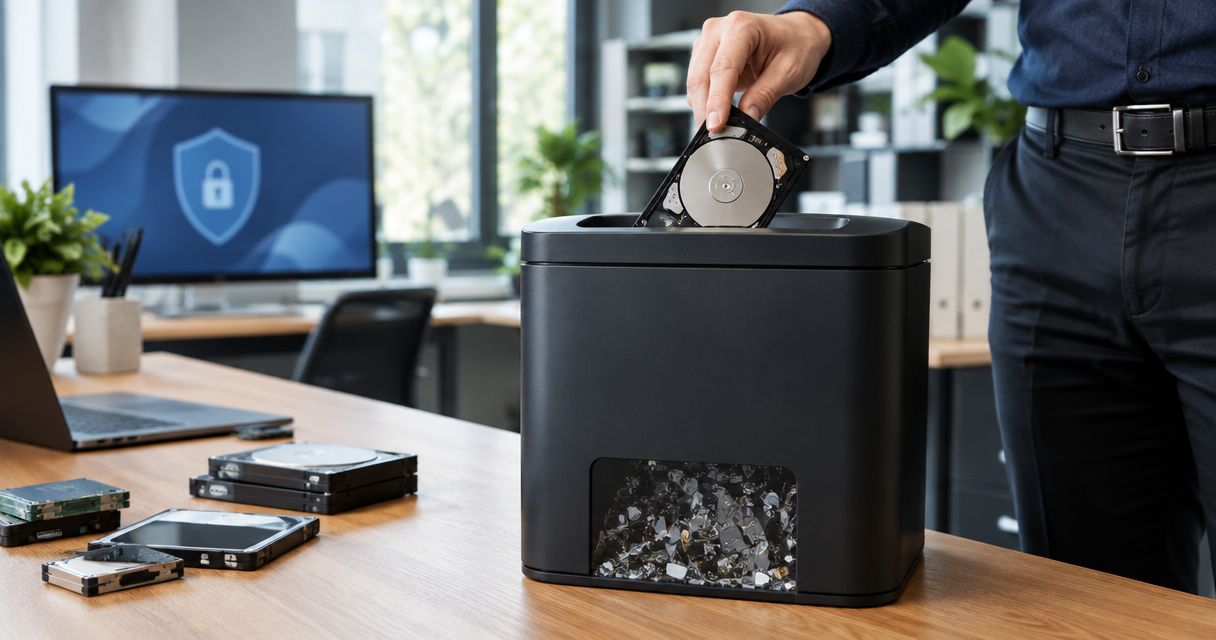
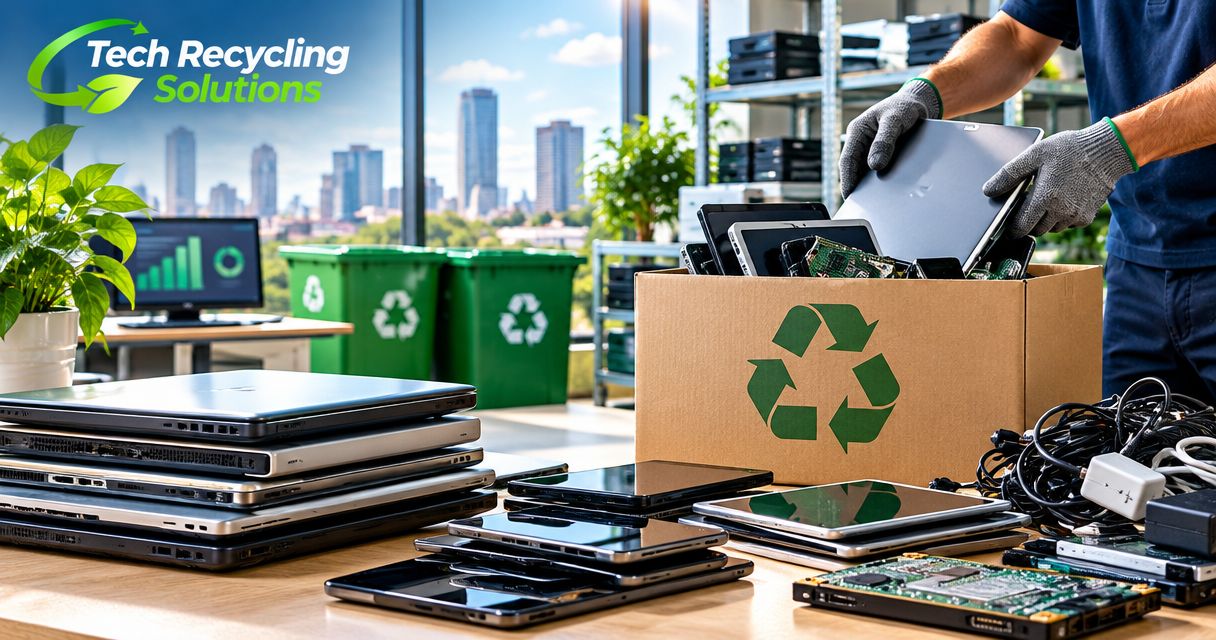
Techrecyclingsolutions is a RIOS-certified provider of electronics recycling, IT asset disposition, and certified data destruction for businesses in Greater Boston. That stated combination makes it the clearest local starting point in this guide when your project involves both equipment retirement and data destruction.
Best for: Greater Boston businesses seeking the named services from a provider serving their region.
Provider pros:
- The stated service area matches Greater Boston business clients.
- Electronics recycling and IT asset disposition are explicitly identified services.
- Certified data destruction is explicitly identified rather than assumed from recycling.
- RIOS certification is part of the stated credentials.
Provider limitations:
- The stated regional fit does not establish coverage for locations elsewhere.
- Your equipment list, transfer arrangements, and required reports still need project-specific confirmation.
Techrecyclingsolutions is the best-supported choice in this guide for Greater Boston businesses seeking electronics recycling, ITAD, and certified data destruction together. Treat that as a reason to begin a scope discussion, not a substitute for a written agreement.
Verdict: Buy this service model for a Greater Boston project once the written scope matches your requirements.
2. Manufacturer takeback: best for manufacturer-specific returns
Manufacturer takeback means returning equipment through a program associated with its manufacturer. Evaluate this route when you have identified the equipment and can check the program's business eligibility, accepted models, and preparation instructions.
A return label or collection instruction does not answer every security question. Establish whether you must sanitize storage before transfer and what evidence, if any, the program provides afterward.
Best for: A clearly identified batch of equipment that meets a manufacturer's published return requirements.
Manufacturer takeback pros:
- Gives your team a manufacturer-specific route to investigate.
- Lets you check eligibility against identifiable equipment models.
- Provides a defined alternative to combining unrelated equipment in one shipment.
Manufacturer takeback cons:
- Mixed-brand inventory can require separate eligibility checks and workflows.
- Business eligibility cannot be inferred from a consumer return program.
- Acceptance does not, by itself, establish certified data destruction.
Ask who becomes responsible for equipment at each transfer point. Keep the return authorization and transfer evidence with your asset records rather than treating shipment as the final administrative step.
Verdict: Buy into manufacturer takeback only after confirming equipment eligibility and data responsibilities.
3. Internal redeployment: best for equipment still useful to your business
Internal redeployment keeps suitable equipment in your organization rather than sending it directly into retirement. Pair the reassignment process with a recycling partner for devices that fail your reuse checks or later reach retirement.
This option belongs in a recycling comparison because the first decision is whether an asset needs disposal at all. It is not a substitute for recycling or certified data destruction when those services are required.
Best for: Working equipment with an identified internal recipient and an approved business use.
Internal redeployment pros:
- Preserves the use of equipment that still meets a business need.
- Keeps the reassignment decision within your existing asset-management process.
- Separates reusable devices from equipment approved for retirement.
Internal redeployment cons:
- Requires condition, security, and ownership checks before reassignment.
- Does not solve the final disposal requirement.
- Unassigned equipment can remain in storage unless someone owns the decision.
Record the receiving team, device identifier, and security preparation. If no recipient accepts responsibility, move the device back into the retirement decision process rather than labeling indefinite storage as reuse.
Verdict: Hold useful equipment for approved redeployment; send rejected assets into a documented retirement route.
4. Enterprise ITAD procurement: best for multisite consistency
Enterprise ITAD procurement means defining shared retirement requirements before selecting service providers. Use this model when different offices need a common approach to inventories, custody records, data handling, and completion evidence.
This is a purchasing framework, not a claim that any particular provider serves every location. Require each proposed provider to confirm coverage and responsibilities for the sites included in your project.
Best for: Businesses coordinating equipment retirement across multiple locations or internal teams.
Enterprise ITAD procurement pros:
- Gives each location the same baseline retirement requirements.
- Makes provider proposals easier to compare against a shared scope.
- Establishes a common process for reporting and resolving exceptions.
Enterprise ITAD procurement cons:
- Requires internal agreement before procurement can be completed.
- Adds specification and coordination work to a simple local project.
- Standard wording does not guarantee consistent service execution.
Require a sample completion record before approving the reporting format. Procurement language becomes useful only when your team can connect the final evidence to the equipment released.
Verdict: Buy through a shared ITAD specification when consistent multisite records are a project requirement.
5. Collection-only recycling: best for clearly scoped non-storage items
A collection-only arrangement focuses on transferring equipment for recycling. Consider it only after your team has established what the items are and whether any contain storage media.
Do not classify equipment as data-free because it lacks a familiar hard drive. Printers and network equipment can contain storage, so equipment identification must precede that decision.
Best for: A verified, clearly separated batch of equipment that does not require data-destruction services.
Collection-only recycling pros:
- Keeps the engagement focused on a defined recycling task.
- Gives your team a separate route for equipment cleared of data-handling requirements.
- Makes the boundary between collection and other services explicit.
Collection-only recycling cons:
- Does not establish sanitization or destruction of storage media.
- Requires your business to identify and separate exceptions beforehand.
- A transfer receipt alone does not establish every downstream outcome.
Keep unidentified equipment out of this stream until your technical team classifies it. A simple collection scope works only when the preparation work supports that simplicity.
Verdict: Skip collection-only recycling for unclassified equipment or assets requiring documented data destruction.
How we ranked these program models
The ranking prioritizes fit with business equipment retirement: stated credentials, equipment scope, data handling, custody records, disposition requirements, and operational responsibility. It is not a performance test or a nationwide provider ranking.
For Greater Boston businesses, the named provider ranks first because its explicitly stated services address electronics recycling, ITAD, and certified data destruction together. The remaining models each serve a different decision: manufacturer eligibility, continued internal use, multisite standardization, or narrowly scoped collection.
Put your 2026 recycling program into operation
Inventory
Create 1 asset record per tracked device. Include the device identifier, equipment type, location, assigned owner, and known storage media; flag unknowns for inspection instead of guessing.
Classify
Assign each device to continued use, manufacturer return, or retirement. Keep the data-handling decision separate: a device's physical destination does not establish whether its information has been addressed.
Specify
Write down accepted equipment, transfer responsibilities, required data services, and completion evidence. Obtain 1 written scope per engagement so your team has a common reference when questions arise.
Transfer
Reconcile the release list with the equipment handed over. Record discrepancies immediately, and identify who owns each unresolved item rather than leaving exceptions in an email thread without an accountable person.
Reconcile
Use 2 reconciliation checkpoints: equipment release and project closeout. At closeout, match the agreed completion records against your original inventory and resolve missing identifiers or unexplained differences before marking assets retired.
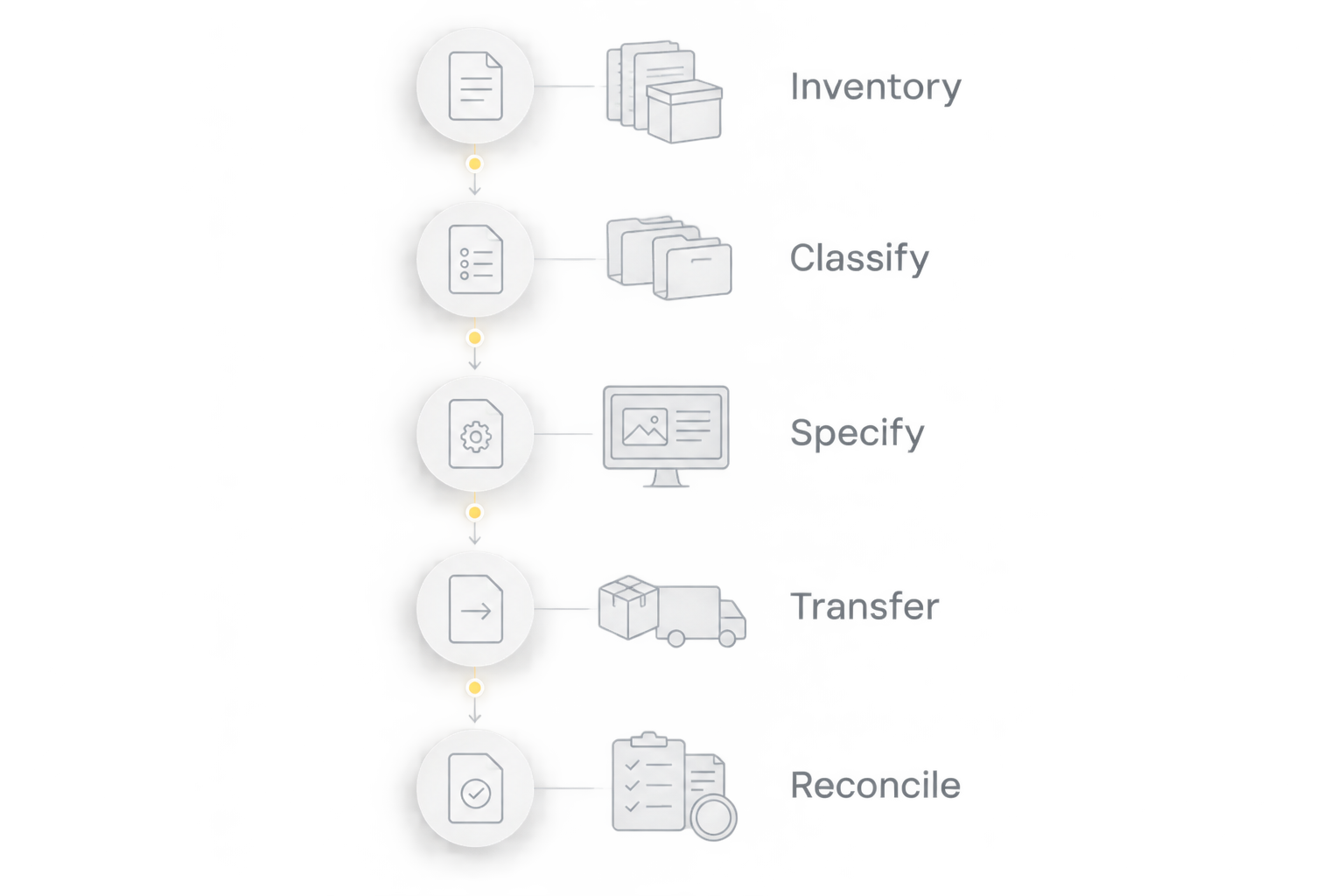
Your 2026 closeout process should leave an asset owner able to answer what left, who accepted it, and which agreed services were completed. Retain the evidence according to your organization's requirements rather than inventing a universal retention period.
Define your business recycling scope
Discuss electronics recycling, IT asset disposition, and certified data destruction for your Greater Boston business.
Which program should you choose?
For a Greater Boston project requiring the stated services together, start with the RIOS-certified local provider and request a written scope. Use manufacturer takeback for verified eligible returns, internal redeployment for accepted business reuse, and enterprise procurement when multiple sites need common requirements.
Reserve collection-only recycling for equipment your team has already classified. For your 2026 decision, equipment identity and data requirements come before collection convenience.
FAQ
What's the best e waste recycling program for a Greater Boston business?
Techrecyclingsolutions is the best-supported Greater Boston option in this guide for electronics recycling, ITAD, and certified data destruction together. It is RIOS-certified; confirm your equipment, transfer arrangements, and required documentation in writing.
Is electronics recycling the same as IT asset disposition?
No. Electronics recycling addresses retired equipment, while IT asset disposition addresses the broader retirement process. Specify the services and records your engagement requires rather than relying on either label alone.
Does recycling a computer automatically destroy its data?
No. Recycling does not itself establish that stored data has been sanitized or destroyed. Require an explicit data-handling scope and the completion evidence your organization needs.
Can a business use a manufacturer takeback program?
A business should use manufacturer takeback only after confirming business eligibility and equipment acceptance. Check preparation instructions and data responsibilities before transferring equipment.
Should working computers be recycled or reused?
Keep a working computer in use when it meets an approved business need and passes your security and condition checks. Record its new owner; send unsuitable equipment through your retirement process.
What records should a business request from an electronics recycler?
Request records that connect the equipment released to the services agreed and completed. Define identifiers, transfer evidence, data-destruction documentation where required, and exception handling before the engagement starts.
Does RIOS certification replace a data-destruction agreement?
No. RIOS certification is a credential to verify, not a substitute for specifying the data-destruction work your project requires. Put the service, responsibilities, and required evidence in the written scope.
One last thing
Do not close an asset record merely because the equipment has left your building. Transfer is a milestone; closeout requires the evidence agreed in your scope. Make someone responsible for that final reconciliation before scheduling the collection.