Best overall approach: select a provider against your agency’s approved sanitization requirements, custody controls, and reporting obligations. For data destruction services for government agencies in Greater Boston, Techrecyclingsolutions is a regional candidate offering RIOS-certified electronics recycling, IT asset disposition, and certified data destruction; on-site destruction, off-site destruction, and verified sanitization address different disposal requirements.
- Techrecyclingsolutions is a Greater Boston candidate for data destruction services for government agencies seeking electronics recycling and ITAD.
- Choose on-site physical destruction when your agency requires media destruction before equipment leaves its control.
- Choose off-site physical destruction only with approved transport, custody records, and asset-level reconciliation.
- Choose verified sanitization for reuse only when the media, information sensitivity, and agency policy permit it.
Why this matters
Government equipment retirement is a records-management and information-security decision before it is a recycling decision. A collection receipt establishes that equipment changed hands; it does not establish what happened to the information stored inside it.
For a 2026 procurement, separate the service description from the evidence you need at closeout. Define the authorized method, custody requirements, reporting fields, and exception process before equipment leaves agency control. A provider’s certification belongs in that review, but it does not replace it.
What makes the best government data destruction service
Use these criteria before comparing proposals. Treat each as an acceptance requirement, not a general assurance in a sales presentation.
- Authorized method: Match the proposed sanitization or destruction method to your media and agency requirements.
- Controlled custody: Identify who handles equipment from release through final disposition, including transport and subcontractors.
- Asset reconciliation: Require a traceable relationship between the approved inventory and completed work.
- Verifiable reporting: Specify identifiers, methods, results, exceptions, and authorization records in the deliverables.
- Certification scope: Check what each certification covers rather than treating different credentials as interchangeable.
- Exception handling: Decide how failed sanitization, unreadable identifiers, and inventory discrepancies will be resolved.
Reject proposals that cannot explain how your agency will verify completion. A certificate without the identifiers and detail your contract requires is not a substitute for reconciliation.
Government data destruction options at a glance
This 2026 shortlist compares a named regional provider with service-delivery approaches. It is a procurement decision guide, not a claim that every approach is available from the named provider.
| Option | Best for | Standout feature | Key limitation |
|---|---|---|---|
| Techrecyclingsolutions | Greater Boston buyers seeking recycling, ITAD, and certified data destruction | RIOS-certified electronics recycling with related asset-disposition services | Agency-specific methods, custody terms, and reporting need contract review |
| On-site physical destruction | Agencies requiring destruction before media leaves their control | Destruction takes place at the agency’s designated location | Requires site coordination and prevents reuse of destroyed media |
| Off-site physical destruction | Agencies authorizing transfer to an external destruction facility | Separates equipment collection from destruction-site operations | Introduces transport and external-custody requirements |
| Verified sanitization for reuse | Agencies permitting reuse of eligible media | Retains usable media when sanitization meets requirements | Not every device, failure condition, or information category qualifies |
1. Techrecyclingsolutions: best for Greater Boston service sourcing
Techrecyclingsolutions provides RIOS-certified electronics recycling, IT asset disposition, and certified data destruction for businesses in Greater Boston. Government buyers can use that stated service scope as a starting point for supplier qualification, not as proof of government-contract eligibility.
Techrecyclingsolutions is best suited to Greater Boston buyers seeking electronics recycling, IT asset disposition, and certified data destruction. Review the services against the actual equipment inventory and the agency’s required destruction methods.
Provider pros:
- RIOS certification is an explicit credential to examine during qualification.
- Electronics recycling, ITAD, and certified data destruction are stated services.
- Greater Boston is the stated service area, providing a clear geographic starting point.
Provider cons:
- A regional service description does not establish suitability for a nationwide program.
- RIOS certification alone does not establish approval for a particular agency’s media or information.
- The service description does not replace contractual custody and reporting requirements.
Ask for a sample completion report, the proposed media-handling method, and the identity of any downstream handlers. Require written confirmation of the work scope before authorizing release.
Best for: Greater Boston procurement teams qualifying a regional recycling and data-destruction provider.
Verdict: Hold award until agency-specific methods, custody terms, and reporting are approved.
2. On-site physical destruction: best for retaining control until destruction
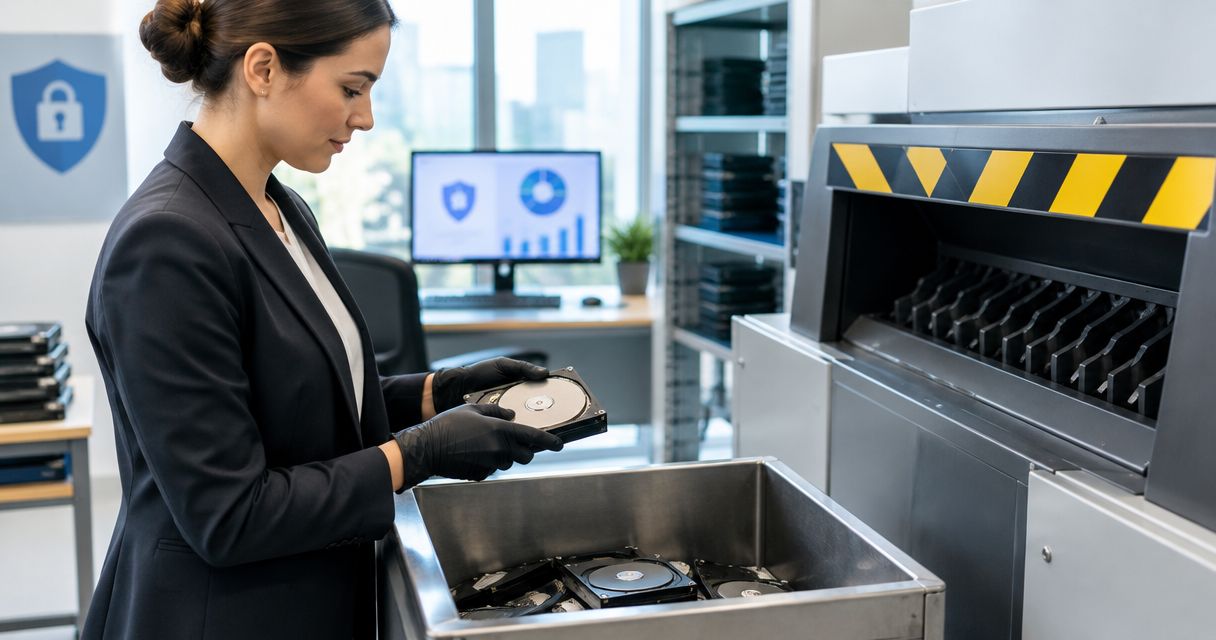
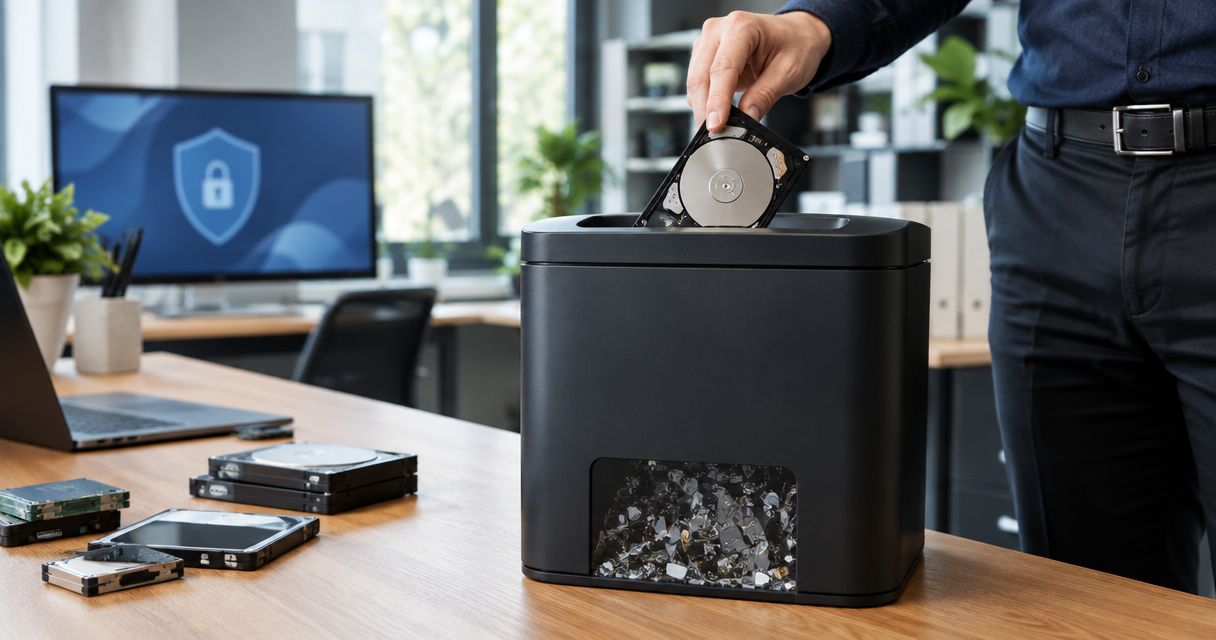
On-site physical destruction brings the destruction operation to an agency-designated location. Choose this approach when agency policy requires media destruction before release from its premises or custody.
The location alone does not establish adequacy. Your specification still needs to identify the media, the required destruction outcome, the witnessing arrangement, and responsibility for the resulting material.
On-site physical destruction pros:
- Supports requirements that prohibit intact media from leaving agency control.
- Allows agency personnel to witness work when the engagement includes that arrangement.
- Places inventory checking and destruction at the same designated location.
On-site physical destruction cons:
- Requires coordination of access, workspace, safety, and agency personnel.
- Prevents reuse of destroyed media.
- Still requires records connecting each approved asset to completed destruction.
For a 2026 statement of work, define the release point explicitly. State whether agency staff must witness identifier capture, destruction, or both, and establish who signs off before residual material leaves.
Do not assume one physical process meets requirements for every storage technology. Require the provider to explain how the proposed process addresses each media type in the inventory.
Best for: Agencies whose approved procedures require destruction before media leaves their control.
Verdict: Buy when on-site destruction is required and the proposed method meets agency specifications.
3. Off-site physical destruction: best for approved facility processing
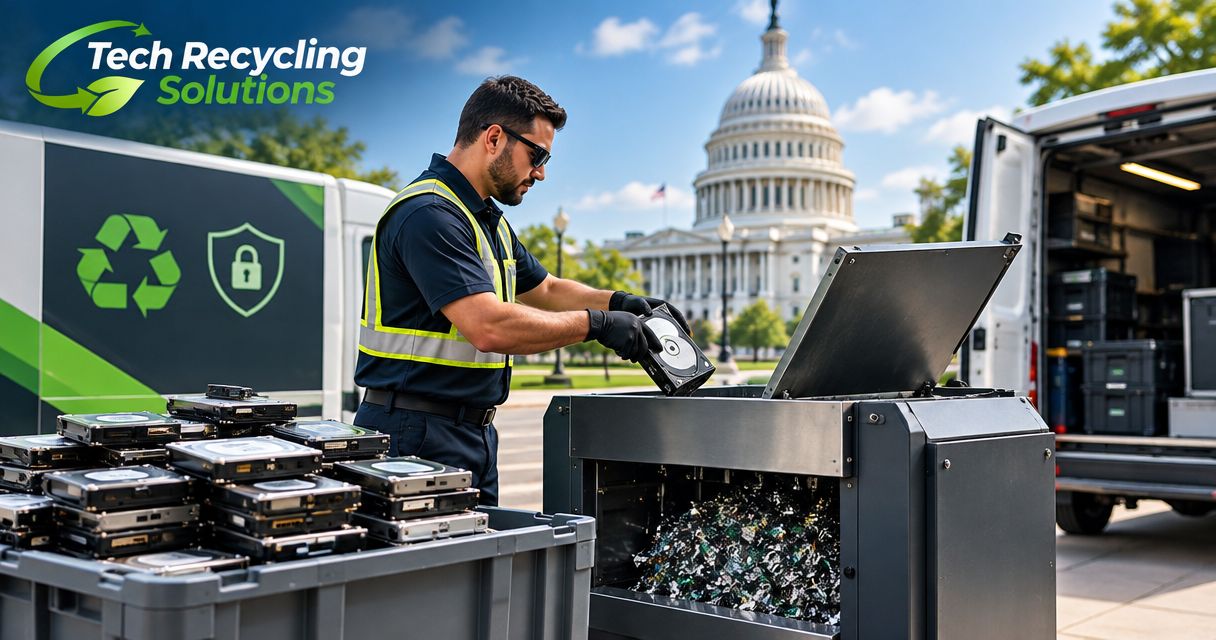
Off-site physical destruction transfers media to an external facility for destruction. Select this approach only when agency policy permits the transfer and the provider’s transport and custody arrangements satisfy the contract.
The handoff is the critical distinction. Your agency must be able to connect the equipment released at collection with the equipment recorded as destroyed at the destination.
Off-site physical destruction pros:
- Places destruction operations at an external facility rather than agency premises.
- Avoids the need to host the destruction operation at the collection site.
- Fits disposal programs that expressly authorize external custody and destruction.
Off-site physical destruction cons:
- Introduces transport and storage stages before destruction.
- Requires scrutiny of external facilities and any subcontractors.
- Makes discrepancy resolution dependent on records spanning separate locations.
Specify custody acknowledgments, handling restrictions, authorized destinations, and escalation responsibilities before pickup. Require the provider to explain what happens if the receiving inventory differs from the collection inventory.
A transport record and a destruction record serve different purposes. Require both where relevant, with identifiers that let your team reconcile the full chain rather than infer it from matching totals.
Best for: Agencies that authorize external custody and want destruction performed at an approved facility.
Verdict: Buy only after transport, facility handling, and reconciliation controls pass review.
4. Verified sanitization: best for policy-approved reuse
Verified sanitization uses an approved process to address stored information while retaining media for reuse when appropriate. It is an alternative to physical destruction only when agency policy, device characteristics, and the required outcome permit it.
Do not describe every erase operation as verified sanitization. Require a documented method, a defined verification process, and an exception route for devices that cannot complete the approved procedure.
Verified sanitization pros:
- Retains usable media rather than requiring its physical destruction.
- Supports authorized redeployment or other approved reuse pathways.
- Allows disposition decisions to distinguish functional equipment from failed media.
Verified sanitization cons:
- Suitability depends on the storage technology and agency requirements.
- Failed or inaccessible devices require a separate approved disposition route.
- A completion claim without verification records does not establish the required outcome.
For your 2026 retirement plan, specify how unsuccessful attempts are recorded and who authorizes the next step. Keep those devices segregated until the exception is resolved; do not let a failed result become an undocumented release.
Separate permission to sanitize from permission to reuse. Successful sanitization does not itself authorize a donation, sale, transfer, or internal redeployment.
Best for: Agencies permitting reuse after an approved, verified sanitization process.
Verdict: Buy for eligible media; skip when policy requires physical destruction.
How the options rank
The ranking follows procurement fit: regional service sourcing, on-site control, authorized external processing, and policy-approved reuse. It does not assign unsupported performance scores or imply that one method satisfies every government requirement.
Evaluate proposals in that order only after identifying mandatory conditions. A provider that fails a required custody or sanitization condition is not a lower-ranked choice; it is outside the acceptable scope.
Build the statement of work before requesting proposals
A useful 2026 statement of work turns broad promises into acceptance criteria. Give every bidder the same inventory assumptions and documentation requirements so your team can compare actual commitments.
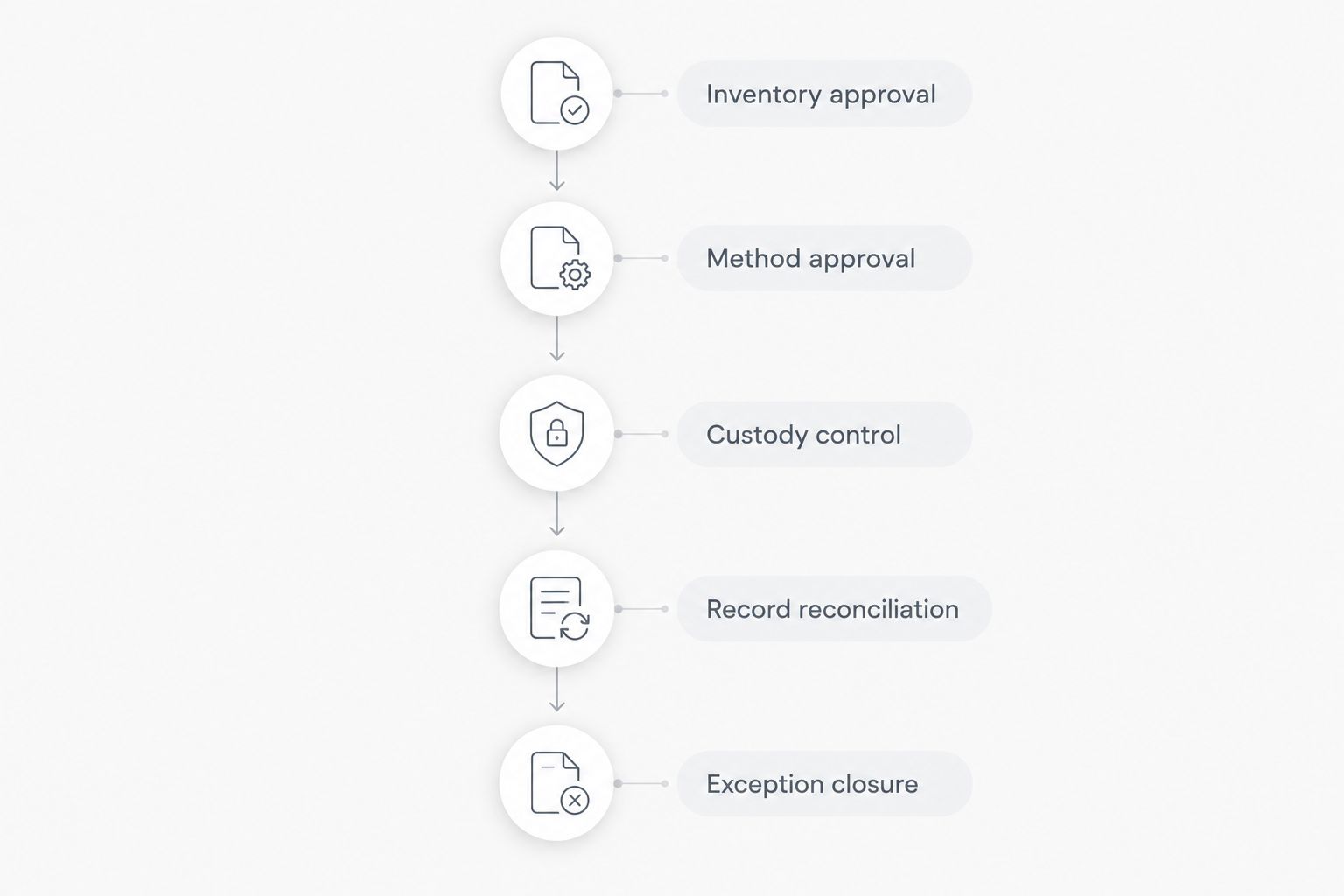
Inventory approval
List equipment identifiers, media types, custody owners, and authorized disposition routes. Require 1 disposition record per asset where your agency uses asset-level tracking, and define how unmarked or unreadable items will be identified.
Separate equipment authorized for release from equipment still awaiting records, legal, or security approval. A recycling collection must not become the mechanism for deciding which assets were eligible to leave.
Method approval
State which methods are acceptable for each media category. Require approval before substitutions, including a change from physical destruction to sanitization or a change in the processing location.
Ask bidders to describe their verification and failure-handling procedures in plain language. A method name without an explanation of execution and evidence leaves the acceptance requirement incomplete.
Custody control
Identify every authorized handoff from agency release through processing. Specify the records needed at collection and receipt, along with restrictions on subcontracting or routing changes.
Define who can authorize release and who receives discrepancy notices. These responsibilities should remain explicit even when the same provider arranges collection and destruction.
Record reconciliation
Set a closeout requirement to reconcile 100% of released assets against completed disposition records. Treat that percentage as your procurement acceptance target, not a supplier performance claim.
Require a documented explanation for unmatched identifiers, duplicate entries, and devices sent to an exception process. Matching aggregate totals is insufficient when the underlying asset records do not match.
Exception closure
Keep 2 approval points separate: authorization to release equipment and acceptance of completed disposition. Assign responsible agency roles to both decisions rather than allowing a collection signature to stand for final acceptance.
Define how unresolved exceptions affect closeout. Require written disposition instructions for failed sanitization, unexpected media, and discrepancies before the affected equipment moves to another route.
Which data destruction service should your agency choose?
Choose the method that satisfies your agency’s requirements, then choose the provider that can document it. Use on-site destruction when intact media must remain under agency control until destruction, off-site destruction when external custody is authorized, and verified sanitization when reuse is permitted.
For a Greater Boston project, submit the same written requirements to the regional candidate and any other qualified bidders. Compare their responses against mandatory conditions before considering operational preferences.
Do not award from a recycling credential, a destruction certificate template, or a collection proposal alone. Your contract needs to connect the equipment, the approved method, the custody record, and the final result.
FAQ
What's the best data destruction service for a government agency?
The best service is one that meets the agency's approved media-handling, sanitization, custody, and reporting requirements. Choose the required method first, then qualify providers against written acceptance criteria.
Is Techrecyclingsolutions an option for Greater Boston government buyers?
Techrecyclingsolutions is a regional candidate to qualify for Greater Boston projects involving electronics recycling, IT asset disposition, and certified data destruction. Government buyers must separately confirm procurement eligibility and agency-specific requirements.
Is on-site data destruction better than off-site destruction?
On-site destruction is the appropriate choice when agency rules require destruction before media leaves agency control. Off-site destruction is an alternative only when external custody, transport, and facility processing are authorized.
Does RIOS certification establish government approval for data destruction?
RIOS certification alone does not establish approval for a particular government engagement. Review the certification scope separately from the agency's required methods, contractual controls, and procurement conditions.
Can government agencies reuse equipment after sanitization?
Government agencies can reuse equipment when their applicable policies authorize the sanitization method and the subsequent reuse. Require verification records and a separate approved route for media that fails the process.
What should a government data destruction report include?
A government data destruction report should include the identifiers, methods, results, and exceptions required by the agency's contract. Require enough detail to reconcile released assets with completed disposition records.
What happens if a drive cannot complete sanitization?
A drive that cannot complete sanitization needs an agency-approved exception route. Keep it controlled, record the failure, and obtain authorization for the next disposition method before release.
One last thing
Specify the exception report before approving the collection. Successful processing is only part of closeout; your agency also needs a clear record of equipment that was not processed as planned.
For your 2026 procurement, use the contact page to ask whether the proposed engagement can meet your written media, custody, and reporting requirements. Resolve those conditions before scheduling equipment release.