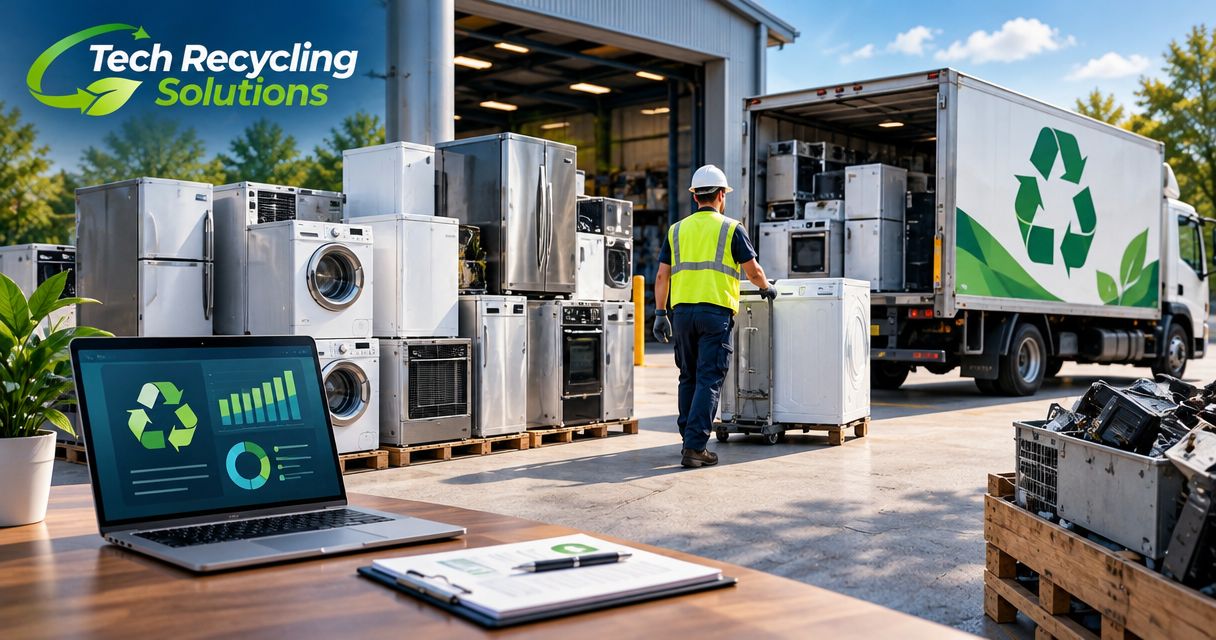
Best overall: a commercial appliance recycler for standard business appliances. Best for refrigeration equipment: a service that explicitly handles refrigerants; best for retired computers and storage devices: an electronics recycling and IT asset disposition provider. This 2026 guide ranks service routes by equipment type, acceptance requirements, and documentation—not unsupported claims about individual providers.
- Choose appliance recycling services by equipment type and written acceptance, not a general recycling claim.
- Use a refrigerant-capable service for refrigerators, freezers, and air-conditioning equipment.
- Techrecyclingsolutions provides RIOS-certified electronics recycling, IT asset disposition, and certified data destruction for Greater Boston businesses.
- Separate business appliances from data-bearing IT assets before requesting proposals.
Why this matters
A business clearing an office kitchen and a server room has different disposal requirements within the same project. A refrigerator requires a different handling decision from a laptop, even when both leave the same building.
RIOS certification does not establish that a recycler accepts your appliances. Techrecyclingsolutions lists electronics recycling, IT asset disposition, and certified data destruction among its services. Confirm appliance acceptance separately rather than treating electronics recycling as a universal equipment category.
For your 2026 project, define what needs removal before choosing who should remove it. Equipment acceptance, refrigerant handling, and data security belong in the scope—not in assumptions made after collection.
What makes the best appliance recycling services
Evaluate each service route against these criteria before requesting a proposal:
- Written acceptance: The provider confirms the actual equipment types, condition, and quantities it will accept.
- Refrigerant handling: The provider explains responsibility for refrigerant recovery when relevant equipment contains refrigerant.
- Business eligibility: The service accepts commercial customers, not just household material.
- Removal scope: The proposal distinguishes collection from disconnection, dismantling, and moving equipment through the building.
- Data handling: Connected appliances and accompanying IT assets receive a separate data-security assessment.
- Completion records: The provider identifies what documentation you receive and which equipment it covers.
The best fit satisfies the requirements of your specific load. A strong electronics recycling credential cannot substitute for confirmation that a refrigerator, dishwasher, or other appliance is accepted.
Appliance recycling services at a glance
These are service categories, not a league table of verified local appliance vendors. The ranking gives you a starting point; equipment-specific requirements override the order.
| Service route | Best for | Standout fit | Key limitation |
|---|---|---|---|
| Commercial appliance recycler | Standard business appliance loads | Appliance-focused acceptance and processing | Confirm each equipment type and removal task |
| Refrigerant-equipment specialist | Refrigerators, freezers, and cooling equipment | Explicit refrigerant-handling scope | Does not automatically cover other appliances or IT |
| Manufacturer or supplier take-back | Equipment replacement projects | Return coordinated with the replacement transaction | Eligibility depends on the actual program |
| Techrecyclingsolutions | Retired business electronics and data-bearing IT | RIOS-certified electronics recycling, ITAD, and certified data destruction | Appliance acceptance is not established by the stated services |
| Municipal commercial recycling program | Eligible, limited business loads | A locally defined acceptance route | Business eligibility and appliance acceptance require verification |
1. Commercial appliance recycler: best for standard appliance loads
A commercial appliance recycler is the first service category to investigate when your project primarily involves business appliances. Request acceptance by equipment type rather than asking whether the company takes miscellaneous equipment.
Your inventory should distinguish dishwashers, cooking equipment, refrigeration equipment, and electronics. A provider's acceptance of one category does not establish acceptance of the others.
Commercial appliance recycler pros:
- Keeps the inquiry focused on appliances rather than general office clearances.
- Lets you match acceptance terms to an itemized equipment list.
- Provides a clear basis for asking about processing and completion records.
Commercial appliance recycler cons:
- An appliance recycling description does not establish refrigerant-handling capability.
- Recycling scope does not automatically include disconnection or building removal.
Best for: Businesses replacing or clearing appliances without assuming that every item needs the same processing route.
Before authorizing work in 2026, request written confirmation of excluded equipment and site responsibilities. Resolve exceptions before scheduling collection, especially when equipment remains connected or requires dismantling.
Verdict: Buy this service when written acceptance covers your appliance inventory and removal scope.
2. Refrigerant-equipment specialist: best for cooling equipment
Choose a refrigerant-focused service route for refrigerators, freezers, and air-conditioning equipment. The procurement question is not simply whether someone can collect the unit; it is who handles the refrigerant and how that responsibility is documented.
EPA refrigerant-management requirements sit under Clean Air Act Section 608 and implementing regulations in 40 CFR Part 82. Requirements differ by equipment and activity, so ask the provider to identify the requirements applicable to your units rather than accepting a generic compliance statement.
Refrigerant-equipment specialist pros:
- Makes refrigerant responsibility an explicit part of the scope.
- Separates cooling equipment from ordinary appliance handling.
- Supports a focused discussion of recovery and disposal documentation.
Refrigerant-equipment specialist cons:
- Refrigerant capability does not establish acceptance of every commercial unit.
- The engagement does not automatically include data destruction or unrelated appliance processing.
Best for: Businesses retiring equipment that contains refrigerant.
Do not instruct staff to cut refrigerant lines or release refrigerant to prepare equipment for collection. Obtain preparation instructions from the qualified service responsible for that work.
Verdict: Buy a refrigerant-capable service for cooling equipment after confirming the applicable handling scope.
3. Manufacturer or supplier take-back: best for replacement projects
When you are replacing equipment, ask the manufacturer or supplying business whether an applicable take-back program exists. This is a route to investigate, not a promise that your supplier offers collection or recycling.
Get the terms for your actual purchase and old equipment. Distinguish delivery, removal, and recycling: a proposal that includes one does not establish that it includes the others.
Manufacturer or supplier take-back pros:
- Creates an opportunity to coordinate replacement and removal.
- Gives the supplier a specific old-equipment inventory to assess.
- Can define handover responsibilities within the replacement project.
Manufacturer or supplier take-back cons:
- No program should be assumed without written terms.
- The program's scope might exclude unrelated equipment in the same building.
Best for: Businesses with a confirmed replacement purchase and an applicable take-back arrangement.
For a 2026 replacement project, put removal requirements into the procurement brief before approving the equipment order. Ask what happens if the old appliance does not meet the program's acceptance conditions.
Verdict: Hold until the supplier confirms eligibility, removal responsibilities, and the recycling destination.
4. Techrecyclingsolutions: best for the electronics portion
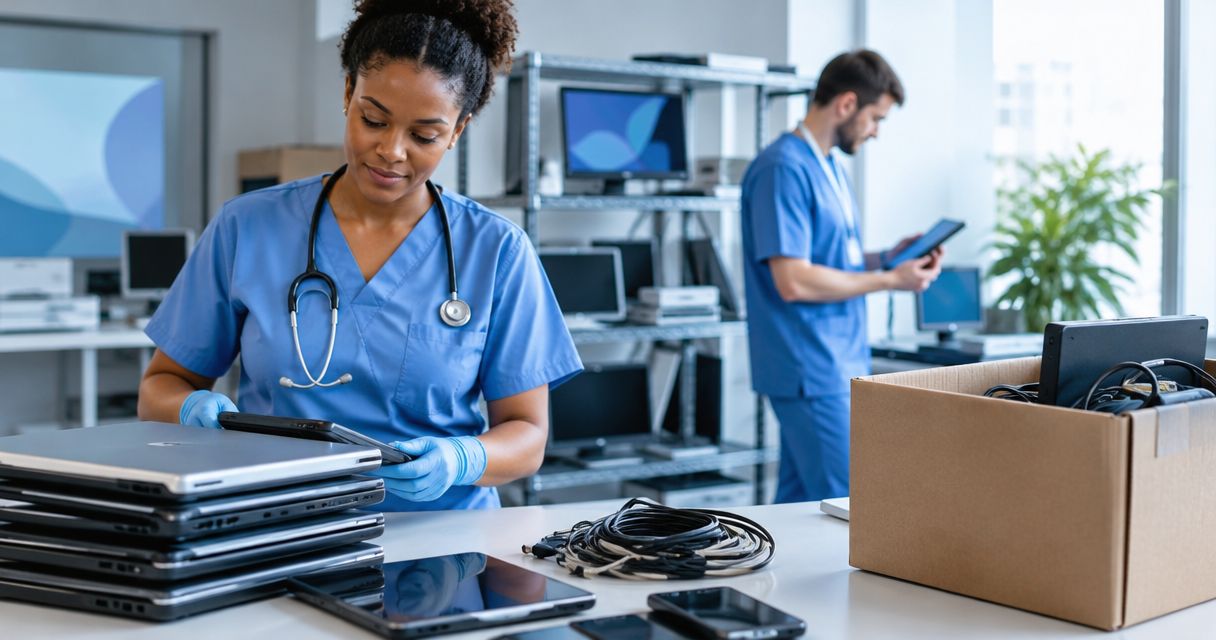
Techrecyclingsolutions provides RIOS-certified electronics recycling, IT asset disposition, and certified data destruction for businesses in Greater Boston. Those stated services make the company relevant to retired computers, storage devices, and other business electronics accompanying an appliance-clearance project.
Techrecyclingsolutions is best for Greater Boston businesses seeking RIOS-certified electronics recycling, IT asset disposition, and certified data destruction. Its stated service scope does not establish appliance acceptance, refrigerant recovery, or appliance disconnection.
Techrecyclingsolutions pros:
- RIOS certification is explicitly identified.
- IT asset disposition is a stated service.
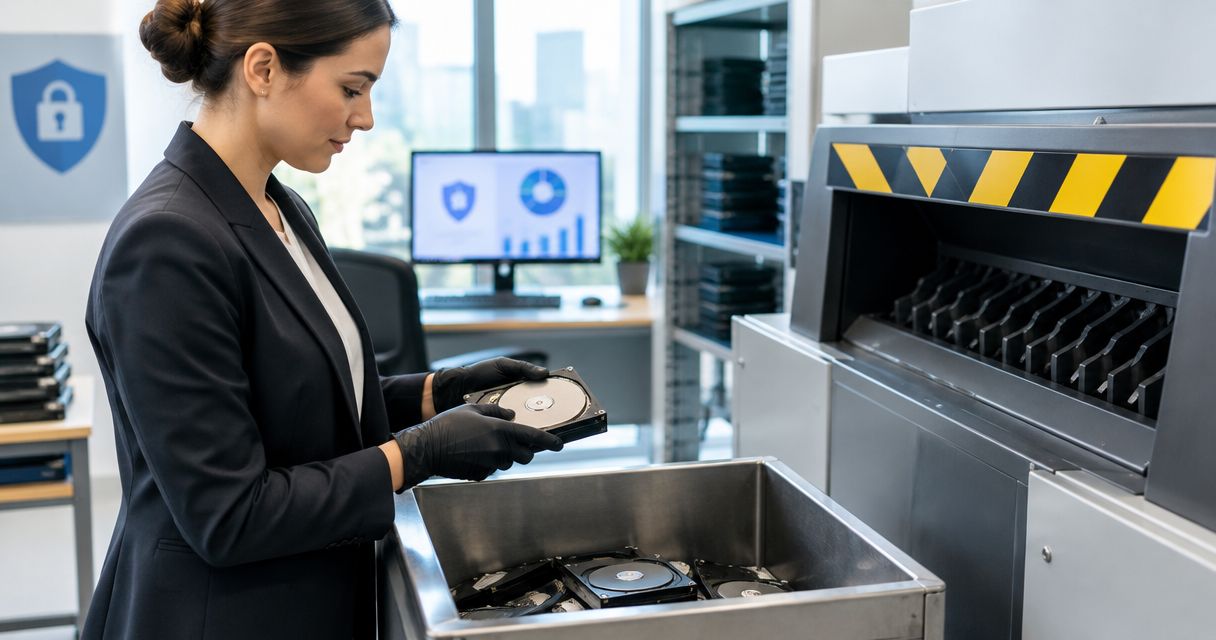
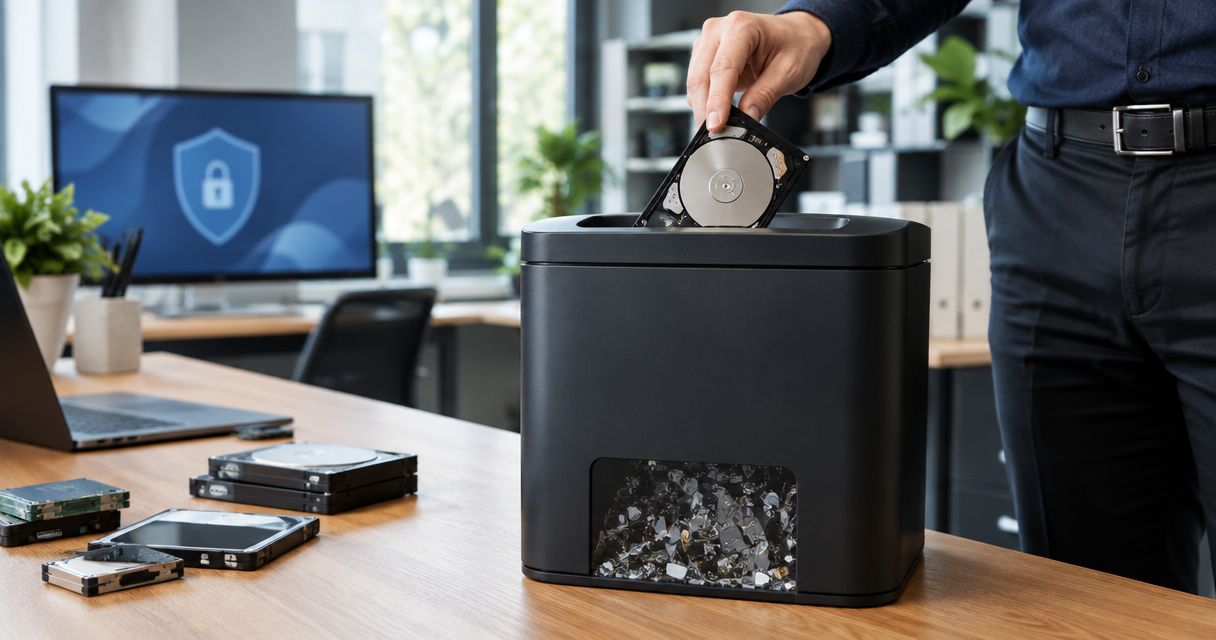
- Certified data destruction addresses a separate requirement from equipment removal.
- Greater Boston businesses are the stated customer group.
Techrecyclingsolutions cons:
- Appliance acceptance requires direct confirmation.
- Refrigerant handling and appliance-removal capabilities are not established by the stated services.
Best for: The business-electronics and data-bearing IT stream within a mixed equipment retirement.
Send an itemized list and distinguish ordinary appliances from IT assets. For a connected appliance with internal storage, ask whether the device is accepted and whether the proposed data-destruction process covers its storage media.
Verdict: Buy for a confirmed electronics and ITAD scope; hold appliance items pending written acceptance.
5. Municipal commercial program: best for eligible limited loads
A municipal recycling program is an option only when its published rules explicitly admit your business and equipment. Do not apply household collection rules to a commercial load.
Check the municipality's current commercial eligibility, appliance categories, preparation instructions, and delivery requirements. Treat unclear wording as a question to resolve before transporting equipment.
Municipal commercial program pros:
- Published acceptance rules provide a concrete screening checklist.
- A qualifying program offers another route to assess for a limited load.
- Equipment-specific instructions can clarify preparation requirements.
Municipal commercial program cons:
- A residential program does not establish business eligibility.
- Municipal recycling acceptance does not establish certified data destruction.
Best for: A limited appliance load that meets an explicitly documented commercial program's rules.
Avoid combining sensitive IT assets with appliances merely because they fit in the same vehicle. Physical convenience does not resolve acceptance or data-security obligations.
Verdict: Hold until commercial eligibility and each appliance category are confirmed.
How to scope your collection request
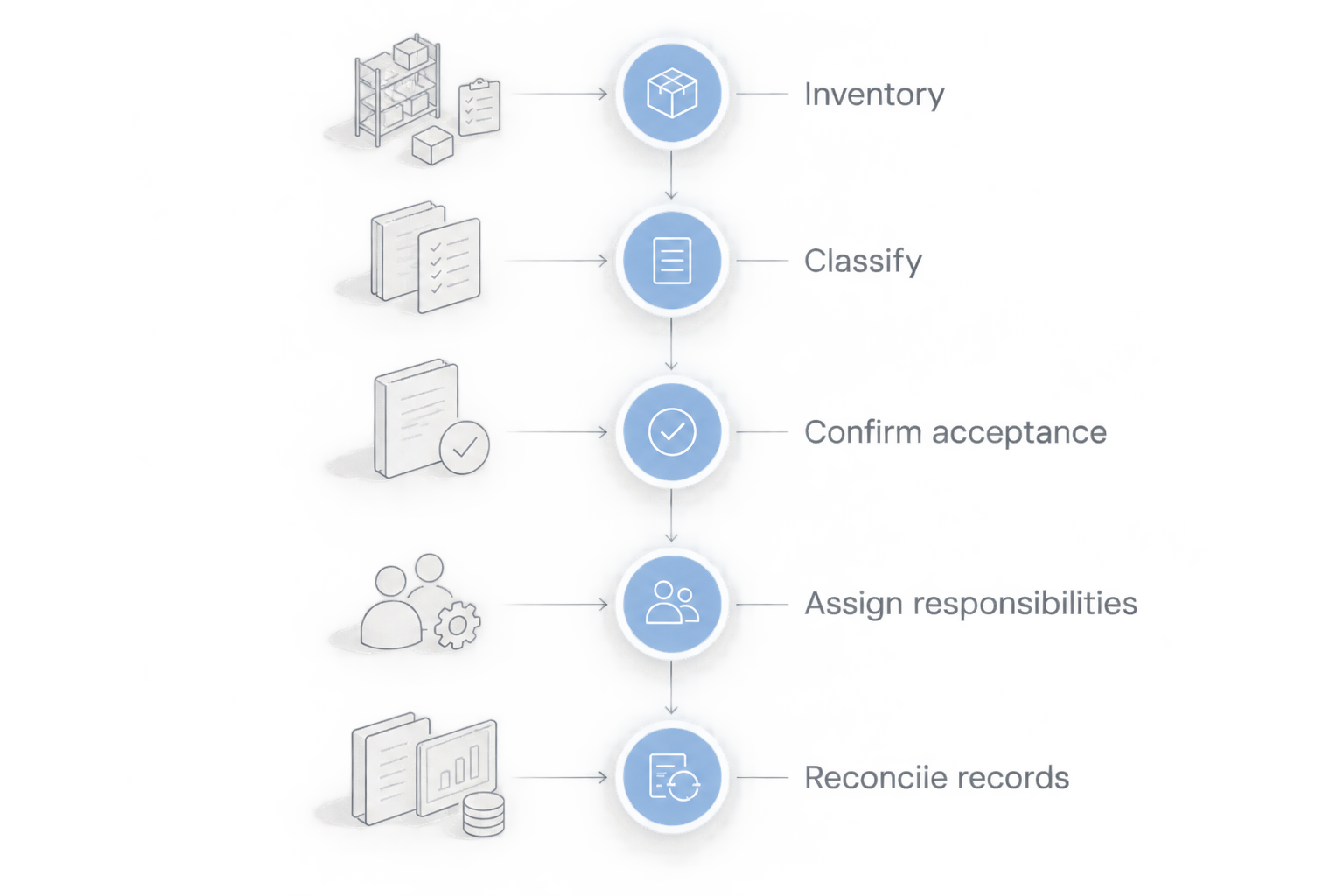
Use 1 asset register for the project, then assign equipment to 2 separate streams: appliances and data-bearing IT. Add a refrigerant flag within the appliance stream so cooling equipment receives the appropriate review.
Inventory
Record equipment type, quantity, location, condition, and identifying details. Note whether an appliance remains connected and whether access requires stairs, lifts, or dismantling.
Classify
Identify refrigerant-containing equipment and devices with storage or saved credentials. Do not treat a factory reset as proof that a provider's certified data-destruction process has occurred.
Confirm acceptance
Send the inventory to each relevant provider and request item-level acceptance. Ask the provider to identify exclusions rather than leaving them implicit.
Assign responsibilities
Name the party responsible for disconnection, refrigerant handling, internal movement, loading, and any required data work. Keep recycling responsibility distinct from removal responsibility.
Reconcile records
Compare the equipment transferred with the completion records promised in the proposal. Investigate missing items or discrepancies before closing the project.
For your 2026 purchasing brief, require 3 checks before approval: accepted equipment, assigned handling responsibilities, and agreed completion records. These are procurement controls, not claims that every provider supplies identical documentation.
How the ranking works
This guide ranks service routes by their fit with business equipment, using the acceptance, refrigerant, removal, data, and documentation criteria above. It does not rank individual appliance companies on unprovided performance data or customer reviews.
Commercial appliance recycling leads for a standard appliance project. Refrigerant handling takes priority for cooling equipment; electronics recycling and certified data destruction belong in the decision when the load includes business IT.
Which appliance recycling services should you choose?
Start with a commercial appliance recycler, then redirect equipment that needs a different specialist. Choose a refrigerant-capable service for cooling units and assess confirmed supplier take-back terms when replacement equipment is involved.
For mixed clearances, use Techrecyclingsolutions for a confirmed electronics recycling, IT asset disposition, or certified data destruction scope—not as an assumed appliance destination. Your best 2026 arrangement is the one that assigns every listed item to an accepted, documented service route.
FAQ
What's the best appliance recycling service for a business?
The best service is one that confirms acceptance of your actual appliances and documents the required handling responsibilities. Start with a commercial appliance recycler, then assess refrigerant-containing equipment and data-bearing electronics separately.
Does Techrecyclingsolutions recycle business appliances?
Appliance acceptance requires direct confirmation. Techrecyclingsolutions states that it provides RIOS-certified electronics recycling, IT asset disposition, and certified data destruction for Greater Boston businesses.
Can refrigerators go with ordinary business appliances?
Refrigerators require an explicit refrigerant-handling assessment before collection. Confirm who is responsible for recovery and which preparation instructions apply to your equipment.
Is electronics recycling the same as appliance recycling?
Electronics recycling and appliance recycling are not interchangeable service descriptions. Ask for acceptance of each equipment category rather than assuming one service covers the entire load.
Can a business use a municipal appliance recycling program?
A business can use a municipal program only when the program's rules allow the business and its equipment. Household eligibility does not establish commercial eligibility.
What should I request in an appliance recycling proposal?
Request an accepted-equipment list, exclusions, removal responsibilities, applicable refrigerant handling, and promised completion records. Add a separate data-security scope for devices that store business information.
Does RIOS certification mean every appliance is accepted?
RIOS certification does not establish acceptance of every appliance. Confirm equipment acceptance and required services independently of the recycler's certification.
One last thing
The person collecting equipment and the party responsible for data destruction are not automatically the same. Before collection, assign an owner to each responsibility and require the agreed records to match the equipment transferred.
A collection receipt confirms a handover; do not treat it as proof of every processing step unless its contents actually document those steps. Keep that distinction in your 2026 equipment-retirement procedure.